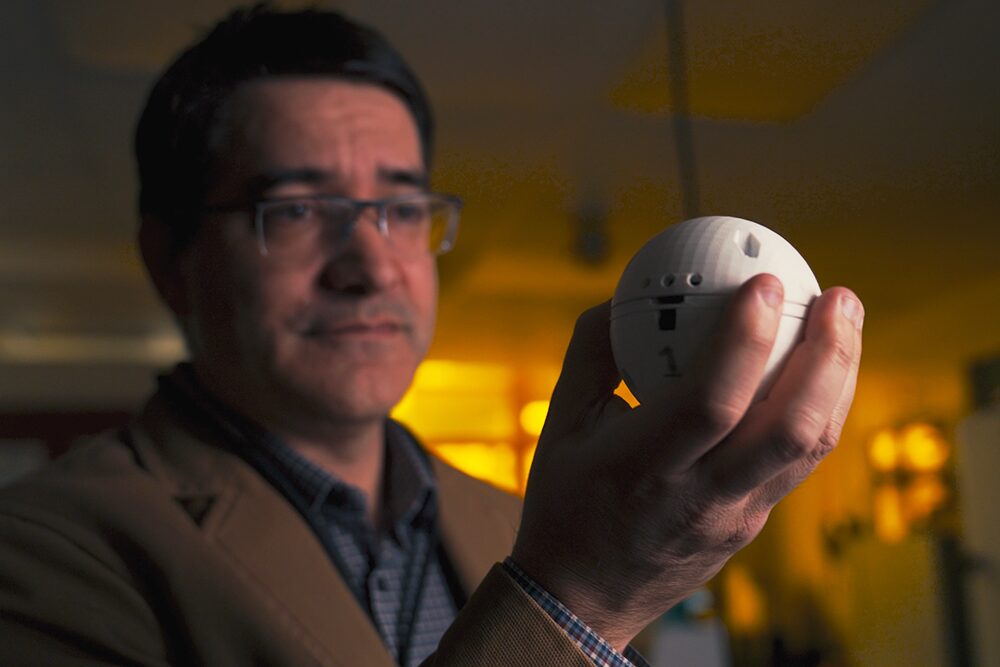
Called the Tactical Optical Spherical Sensor for Interrogating Threats (TOSSIT), the sensor is designed to alert military service members, first responders, and law enforcement to the presence of chemical threats like nerve and blister agents, industrial chemical accidents, or fentanyl dust. Users can simply toss, drone-drop, or launch TOSSIT into an area of concern. To detect chemicals, the sensor samples the air and uses an internal camera to observe color changes on a removable dye card. "TOSSIT fills an unmet need, providing a low-cost sensing option for vapors and solid aerosol threats ' think toxic dust particles ' that would otherwise not be detectable by small deployed sensor systems,' says principal investigator Richard Kingsborough....

Baseball has never been synonymous with change. But in recent years, Major League Baseball has transformed radically, and this season it has embraced technology via the ABS pitch-tracking system (also known as 'robot umpires'). Has the experiment worked' Can baseball evolve in the 21st century without losing a piece of itself' Does the tech make the game less human' On this week's Galaxy Brain, Charlie Warzel brings on Jimmy O'Brien, founder of Jomboy Media, to talk about baseball's overhaul, how to become a lip-reading legend on YouTube, and why Americans love slow sports. Jimmy O'Brien: I don't think the fan nor Major League Baseball'and Rob Manfred has said this'realized how much of an entertainment spectacle it was going to be in stadium to have the big board show up, and the animation. And I think that's a huge part of it. Charlie Warzel: I'm Charlie Warzel, and this is Galaxy Brain, a show where today we are going to counterprogram the World Cup fever by talking about baseball. We're talking balls and strikes, robot umpires, and how the national pastime has learned to embrace technology and stay relevant in the 21st century....

Gambling is a numbers game, so here are a few: The pitcher Emmanuel Clase's 2025 salary from Major League Baseball's Cleveland Guardians is $4.5 million dollars. This weekend, prosecutors unveiled charges that he had made just $12,000 from two recent rigged pitches. And he could face as many as 65 years in prison (though such a stiff sentence seems unlikely). Clase and the fellow Guardians hurler Luis Ortiz were indicted last week for their involvement in the scheme, which allegedly netted bettors hundreds of thousands of dollars. (Attorneys for Clase and Ortiz have denied the allegations.) The scheme outlined in the indictment is the latest instance of legalized gambling's corrosive influence on professional sports. Major leagues have welcomed the industry with open arms and greedy palms, signing contracts with betting companies and bringing casinos into stadiums and arenas, but they act astonished when gambling starts to corrupt their own players. Traditional sports fandom involves rooting for your team to win; traditional sports gambling involves putting money on the game results too. The most notorious baseball-gambling episode was the 1919 'Black Sox' scandal, in which members of the Chicago White Sox (including 'Shoeless Joe' Jackson) were accused of intentionally losing the World Series as part of a mob betting scheme and banned from the sport....
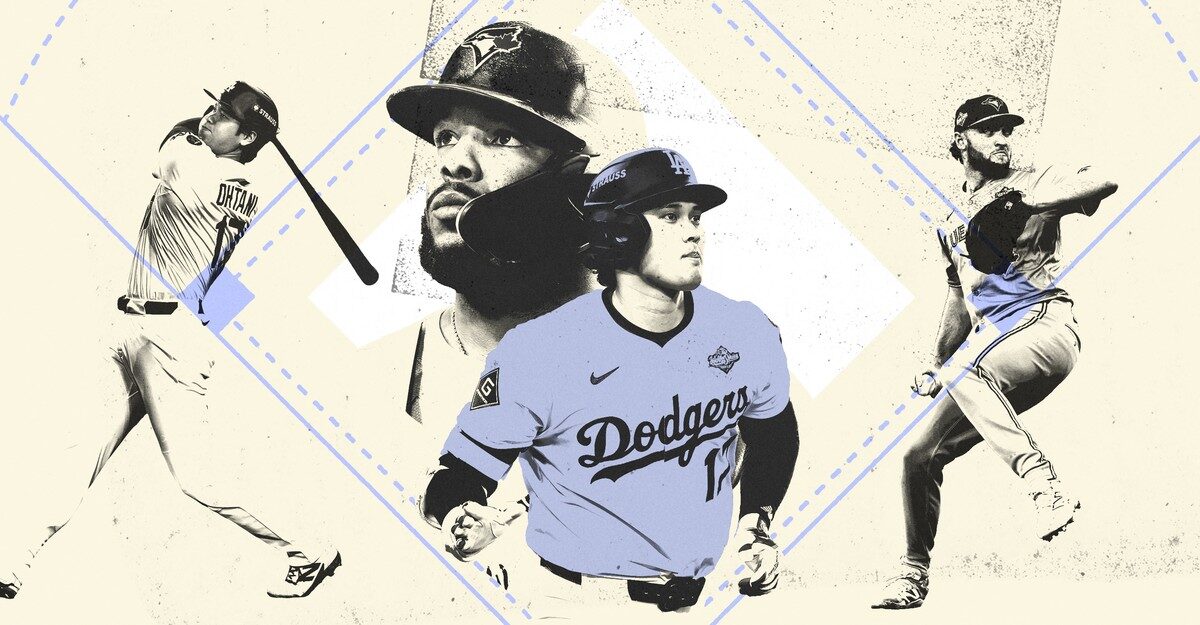
Baseball, perhaps more than any other sport, competes with its own deep mythology. So many of its highlights are in black and white, and so many of its GOATs are ghosts, that the former national pastime is easily dismissed as past its prime. It isn't. The 2025 postseason, which ended when the Los Angeles Dodgers beat the Toronto Blue Jays in the 11th inning of the seventh game of an ulcer-inducing World Series, stands with any in baseball history. The early rounds of the postseason were enlivened by extraordinary feats from the game's two biggest stars, but that was just baseball clearing its throat for the World Series, which earned its title'in English, Spanish, and Japanese; in the United States and Canada'as a genuine Fall Classic. Major League Baseball is 149 years old. The National League was founded a month before Alexander Graham Bell patented the telephone. And the game somehow still delivers the unexpected and the unforeseeable. Game 3 of the World Series was a stone-cold thriller, with peaks of high drama and longueurs of exquisitely tense tedium. It started at 5:11 p.m. in Los Angeles and ended shortly before midnight, when the Dodgers' first baseman Freddie Freeman finally hit a solo home run to the black void of the batter's eye in center field. The home team earned a 6'5 win, a two-games-to-one series lead, and the chance for both teams to briefly rest the record 19 pitchers they collectively employed....