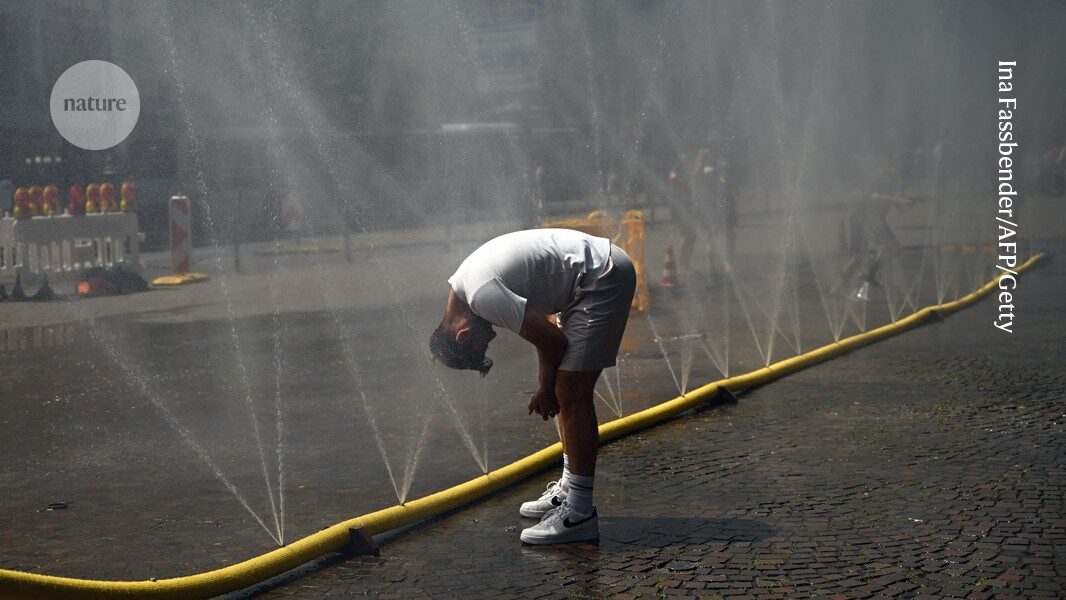
The goal of limiting global warming to 1.5 'C to avoid the most dangerous consequences of climate change is officially dead. According to a report released today by the United Nations Environment Programme (UNEP), the best the planet can hope for on its current emissions trajectory is warming of about 1.8 'C above pre-industrial levels this century. 'Obviously, yes, we have climate procrastinated,' Inger Anderson, UNEP's executive director, said during a briefing on 1 September. 'And obviously yes, when we started UNFCCC [the United Nations Framework Convention on Climate Change] we knew what action had to be taken. And we have not taken it at the speed that we could have.' The nearly 200 countries that signed the Paris climate accord in 2015 agreed to cut greenhouse gas emissions fast enough to keep the rise in global average temperatures 'well below' 2 'C relative to the pre-industrial average, with a stretch goal of limiting the rise to 1.5 'C. Beyond that 1.5 'C threshold, the risks of triggering dangerous tipping points in the climate system grow more acute1, and rise with every tenth of a degree of warming beyond that point, according to the UN's Intergovernmental Panel on Climate Change (IPCC)....
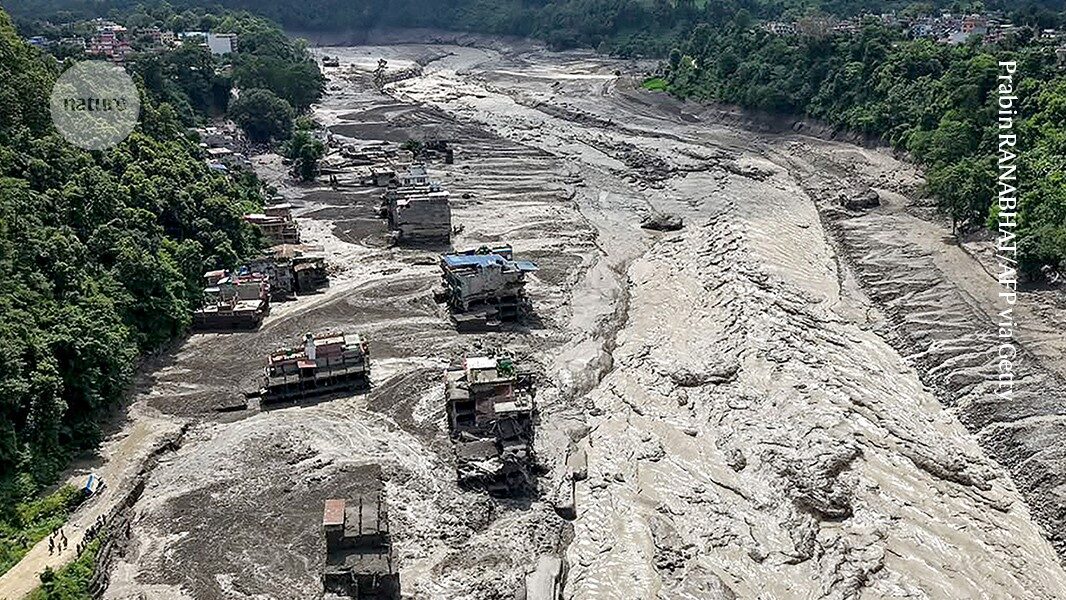
Around 350 people have died and more than 1,000 are missing, after a deadly deluge of rocks, mud and water hit villages along the border of Nepal and Tibet on Wednesday. The US Geological Survey says the event was caused by a glacial collapse that led to a massive landslide and flash flooding. The ice and rock collapse was strong enough to cause a 5.2-magnitude seismic event and send a massive wall of water downstream into the Bhotekoshi River system, along which tens of thousands of people live. Scientists say it will take time to establish the extent to which global warming had a role in this glacial collapse. But melting glaciers and permafrost ' frozen soil and rocks ' in the Himalayas probably contributed to the event, says Goran Ekstrom, a geophysicist at Columbia University in New York City. Global warming is affecting the high-altitude regions across the world, says Alton Byers, a mountain geographer at the University of Colorado, Boulder. 'These catastrophic floods are becoming more frequent,' he adds....

Across Beijing, millions of weeping willows and poplar trees turn the megacity into a green metropolis. But compounds released by these trees are becoming a major contributor to air pollution1, finds a study. Beijing is not alone. Many trees planted in urban areas ' species that are often chosen for their quick growth and climate resilience ' are worsening ozone emissions, suggests the study published in Science Advances today. Rising temperatures from global warming could exacerbate the problem. Ozone forms when volatile organic compounds (VOCs) released by some vegetation, vehicles and chemical industries react with nitrogen oxides (NOx), which are emitted mostly by traffic and industry. A series of reactions between these compounds in the presence of sunlight causes ozone to form. Breathing in ozone can inflame or damage the airways, causing breathing difficulties, particularly in people with asthma or lung disease. Co-author Bin Yuan, who studies atmospheric chemistry at Jinan University in Guangzhou, China, says that the team initially set out to understand the impact of human activity on ozone pollution. But they were surprised to find that urban vegetation was a much larger contributor to ozone emissions than previously thought. 'When we got this data, we did not believe it the beginning,' Yuan says....
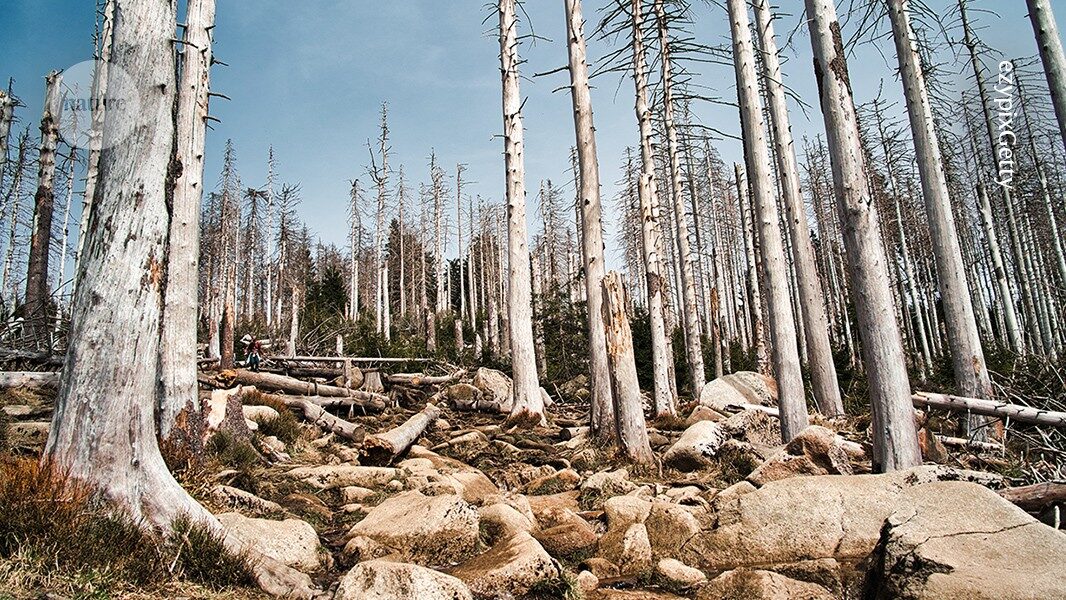
Around 56 million years ago, a sharp rise in carbon dioxide in the atmosphere led to severe global warming that transformed the planet's surface. A detailed reconstruction of an ancient ecosystem suggests that this transformation included a widespread decline in forest cover. The study1, published in Science on 13 August, has parallels for what could happen as a result of human-driven climate change, say the authors. This sudden warming event, called the Paleocene'Eocene Thermal Maximum (PETM), was one of the most notable climatic upheavals in Earth's history. The volume of CO2 released during that period is thought to be roughly equivalent to total human emissions that would be released by the end of the twenty-first century under a pessimistic scenario. The ancient surge of CO2 raised global average temperatures by between 5 and 9 'C, changing the climate for more than 150,000 years. Using fossils, sediments and other geochemical evidence preserved from this time, researchers have begun to piece together a picture of abrupt changes to Earth's ecosystems that took place in response to this warming. The make-up of forests changed, with broad-leafed trees in the mid-latitudes giving way to landscapes dominated by ferns. Rivers supercharged by a water-logged atmosphere carried away more sediment. Soils stored less carbon....