
Most folks who have been through high school mathematics courses will have taken a class called algebra ' maybe even a sequence of classes called algebra I and algebra II that asked you to solve for x. The word 'algebra' may evoke memories of complicated-looking polynomial equations like ax' + bx + c = 0 or plots of polynomial functions like y = ax' + bx + c. Equations and plots like these are part of algebra, but they're not the whole story. What unifies algebra is the practice of studying things ' like the moves you can make on a Rubik's cube or the numbers on a clock face you use to tell time ' and the way they behave when you put them together in different ways. What happens when you string together the Rubik's cube moves or add up numbers on a clock' The short version of the story is that mathematicians found formulas that looked a lot like the quadratic formula for polynomial equations where the highest power of x was three or four. But they couldn't do it for five. It took mathematician Evariste Galois and techniques he developed ' now called group theory ' to make a convincing argument that no such formula could exist for polynomials with a highest power of five or more....

Even though x is one of the least-used letters in the English alphabet, it appears throughout American culture ' from Stan Lee's X-Men superheroes to 'The X-Files' TV series. The letter x often symbolizes something unknown, with an air of mystery that can be appealing ' just look at Elon Musk with SpaceX, Tesla's Model X, and now X as a new name for Twitter. You might be most familiar with x from math class. Many algebra problems use x as a variable, to stand in for an unknown quantity. But why is x the letter chosen for this role' When and where did this convention begin' There are a few different explanations that math enthusiasts have put forward ' some citing translation, others pointing to a more typographic origin. Each theory has some merit, but historians of mathematics, like me, know that it's difficult to say for sure how x got its role in modern algebra. Algebra today is a branch of math in which abstract symbols are manipulated, using arithmetic, to solve different kinds of equations. But many ancient societies had well-developed mathematical systems and knowledge with no symbolic notation....

Strang received a BA and MA in 1957 as a Rhodes Scholar at Balliol College in Oxford, England, and a PhD in 1959 from the University of California at Los Angeles, where he was advised by Peter Henrici. His dissertation was "Difference Methods for Mixed Boundary Value Problems.' A CLE Moore instructor from 1959 to 1961, he joined the MIT faculty in 1962. A full professor in 1970, Strang focuses his research on mathematical analysis, linear algebra, and partial differential equations. 'He has had a tremendous impact on the teaching of mathematics to tens of thousands of students at MIT through his lectures, to countless students at other academic institutions through his textbooks, and to millions of people all over the globe through his online lectures and digital media,' says Professor Michel Goemans, head of the Department of Mathematics. His parents William and Mary Catherine Strang emigrated to the United States from Scotland. Strang and his sister Vivian grew up in Washington and Cincinnati, Ohio, and attended the Principia School in St. Louis, Missouri. He and his wife Jillian have three sons, David, John, and Robert, and 10 grandchildren....
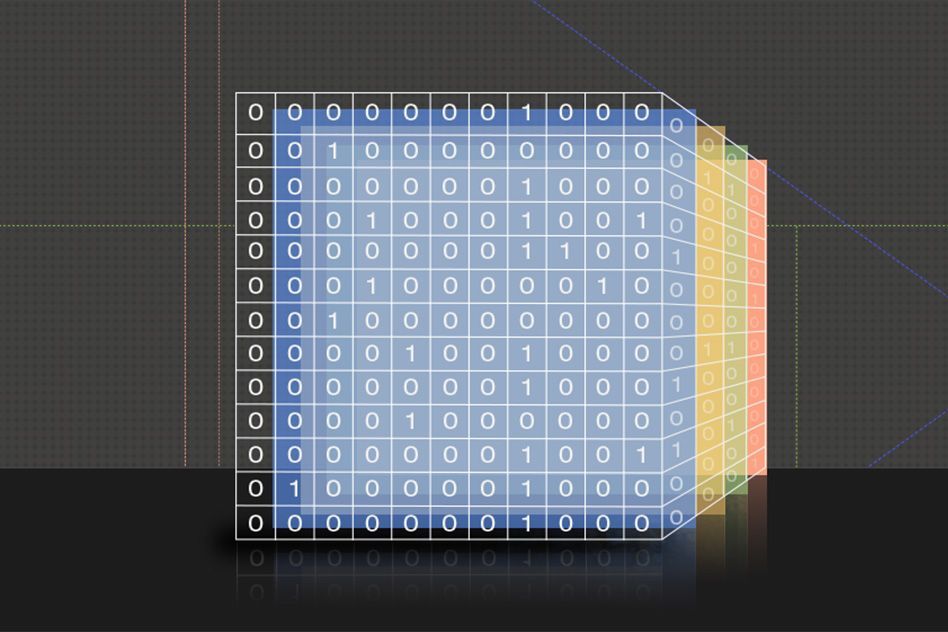
We live in the age of big data, but most of that data is âsparse.â Imagine, for instance, a massive table that mapped all of Amazonâs customers against all of its products, with a â1â for each product a given customer bought and a â0â otherwise. The table would be mostly zeroes.
With sparse data, analytic algorithms end up doing a lot of addition and multiplication by zero, which is wasted computation. Programmers get around this by writing custom code to avoid zero entries, but that code is complex, and it generally applies only to a narrow range of problems.
At the Association for Computing Machineryâs Conference on Systems, Programming, Languages and Applications: Software for Humanity (SPLASH), researchers from MIT, the French Alternative Energies and Atomic Energy Commission, and Adobe Research recently presented a new system that automatically produces code optimized for sparse data.
That code offers a 100-fold speedup over existing, non-optimized software packages. And its performance is comparable to that of meticulously hand-optimized code for specific sparse-data operations, while requiring far less work on the programmerâs part....


