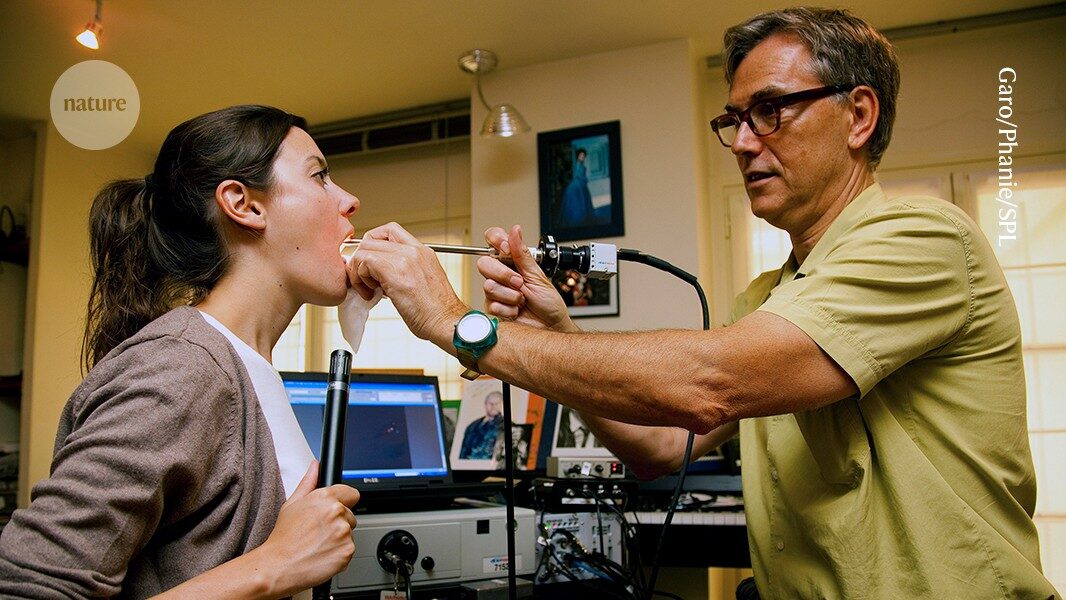
Inspired by the world's largest land animal, researchers have created and tested what they say is the world's smallest 3D bioprinter. The device ' which sports a 2.7-millimetre-wide printhead at the end of a long, flexible arm that moves like an elephant's trunk ' might one day assist physicians by delivering healing hydrogels after surgery. In a report published on 29 October in the journal Device1, the researchers proved that the device could be fed through a physician's surgical scope to deposit hydrogel onto an artificial set of vocal cords. 'This is the first time I've seen a bioprinter that's applicable to vocal folds,' says Ibrahim Ozbolat, a biomedical engineer at Pennsylvania State University in University Park. 'Bioprinting typically addresses skin defects from the outside. Reaching a defect internally has been a challenge in the field.' After undergoing surgery to remove cysts or growths from their vocal cords, people sometimes have difficulty speaking because their vocal...
learn more