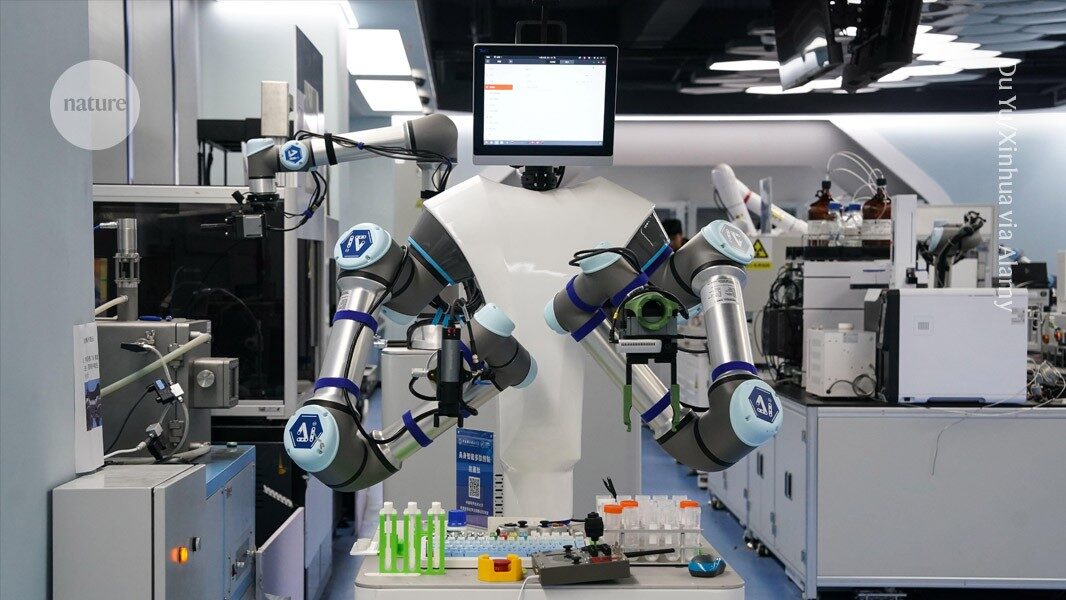
The PhD student at Northwestern University in Evanston, Illinois, was trying to make proteins in a test tube more efficiently. Across more than 40 experiments over 4 months, she tested 1,231 combinations of sugars, amino acids and other ingredients, including cellular machinery, before landing on a cocktail that was at least six-times cheaper than existing cell-free protein-synthesis recipes1. Now, an 'autonomous laboratory' system made up of a large language model (LLM) 'scientist', lab robotics that automate simple tasks such as liquid transfer and human overseers created by scientists at artificial-intelligence firm OpenAI in San Francisco, California, and Ginkgo Bioworks, a biotechnology company in Cambridge, Massachusetts, has eclipsed Olsen's record. It achieved a further 40% reduction in cost, after testing more than 30,000 experimental conditions over 6 months. However, the technology has some way to go before it can gain wide usage. Existing lab robotics still struggle to...
learn more