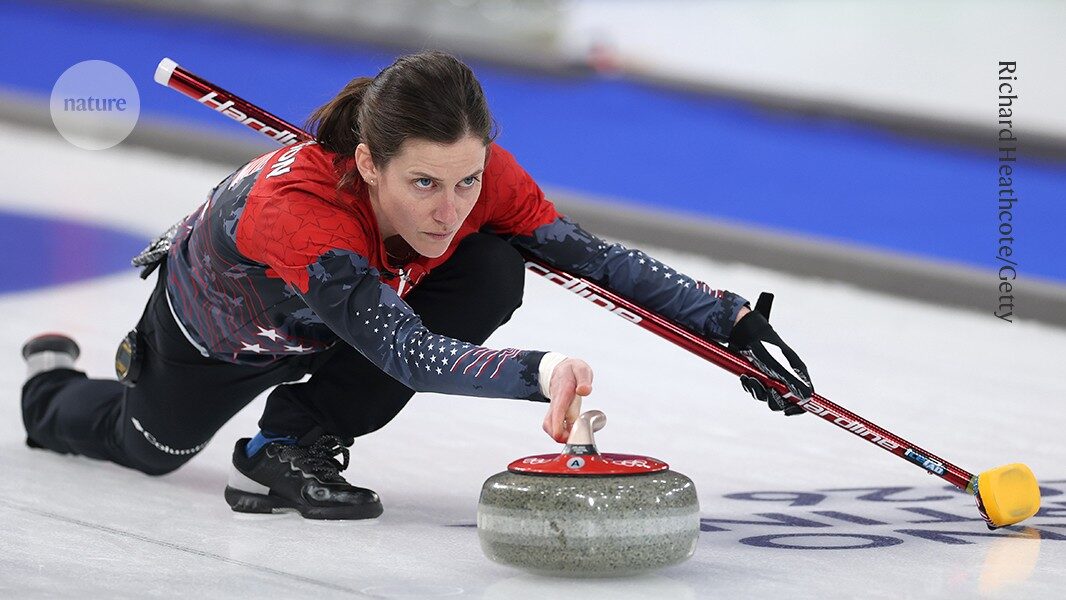
Athletes seem to be testing the laws of nature every day in the 2026 Olympic Winter Games in Italy, with figure skaters spinning four full times in a single jump and bobsledders withstanding forces five times stronger than gravity. But one sport in particular is fascinating scientists. After more than a century of research, physicists still don't entirely understand curling ' specifically, why the heavy granite curling stones move in the opposite way to what is expected as they travel across the ice. The sport of curling, which made an appearance at the inaugural 1924 Winter Olympics, involves two teams of four taking turns to slide granite stones weighing about 19 kilograms across a sheet of ice towards a target. Each team member gives two of the roughened stones a push across the ice ' which is scattered, or 'pebbled', with frozen water droplets ' while applying some spin. This 'throwing' action arcs, or curls, the stones towards the target. If the athlete spins a stone clockwise,...
learn more