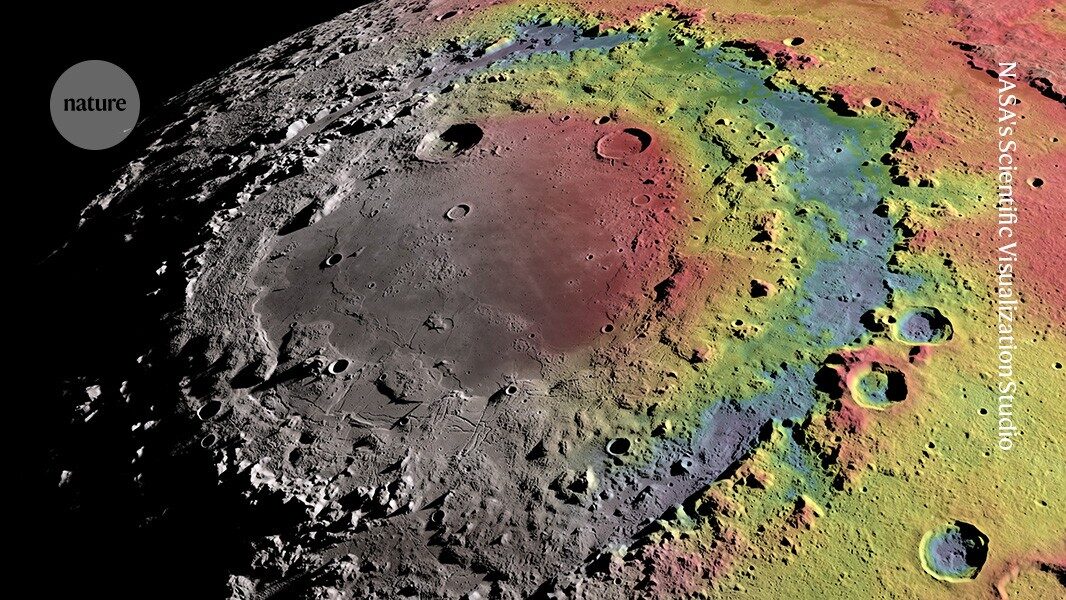
Orientale basin (rendered here in false colour using a computer model) is a multi-ringed impact crater on the far side of the Moon that the Artemis astronauts will see during their fly-by. Credit: NASA's Scientific Visualization Studio This Monday, 6 April, if all goes to plan, the astronauts aboard NASA's Artemis II mission will fly around the far side of the Moon. It will be the first time humans have visited our celestial neighbour since 1972. At mission control at NASA's Johnson Space Center (JSC) in Houston, all eyes will be on the Moon during the six-hour fly-by, set to begin during the afternoon in Texas. Lunar scientists, in particular, are eager to learn what the astronauts see. The far side of the Moon is markedly different than its near side, which faces Earth; the far side has hardly any of the vast lava flows that mark the near side, but it has a thicker crust and many more impact craters. On the basis of the Orion spacecraft's current trajectory, Artemis II scientists...
learn more