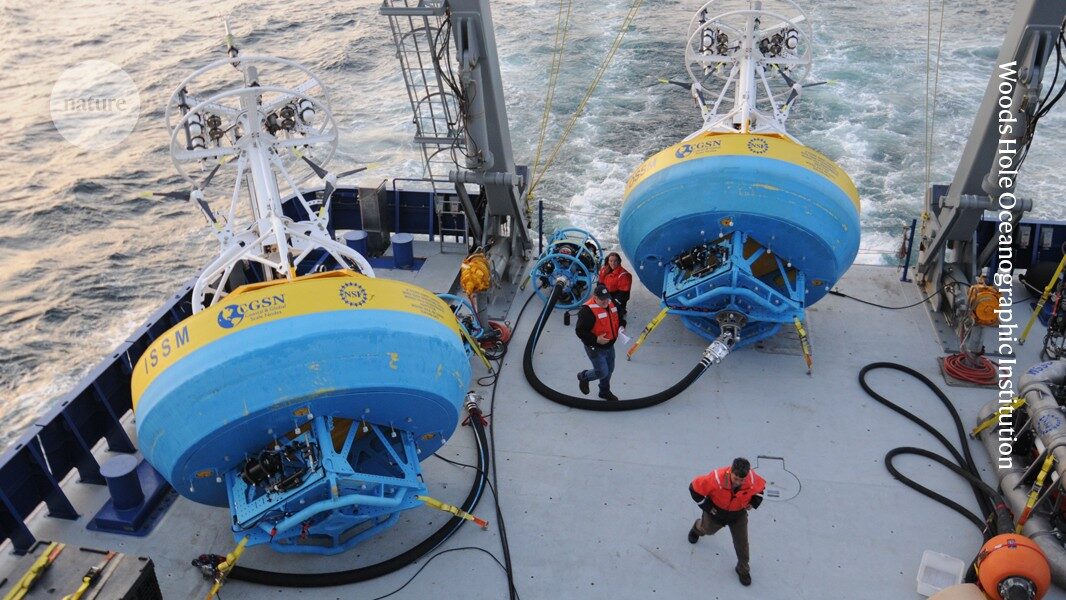
As the RV Marcus G. Langseth sails across the Pacific Ocean this month, researchers are dropping robotic 'floats' into the sea to measure chlorophyll levels and other biogeochemical properties of the water. With a powerful El Nino weather system set to unfold later this year, such observations are crucial for understanding how the ocean will change. But these high-tech floats face an uncertain fate. The devices, which are part of a global flotilla called Argo, were paid for by the US National Science Foundation (NSF). Their funding expires in four months, and NSF officials have so far been silent about future support to keep the devices up and running. The uncertainty hanging over the Argo floats is only one of the worries facing oceanographers. The United States has historically led other nations in peppering the ocean with monitoring instruments and supporting cutting-edge research on the resulting data. But now US support for such studies looks precarious ' as does the future of...
learn more