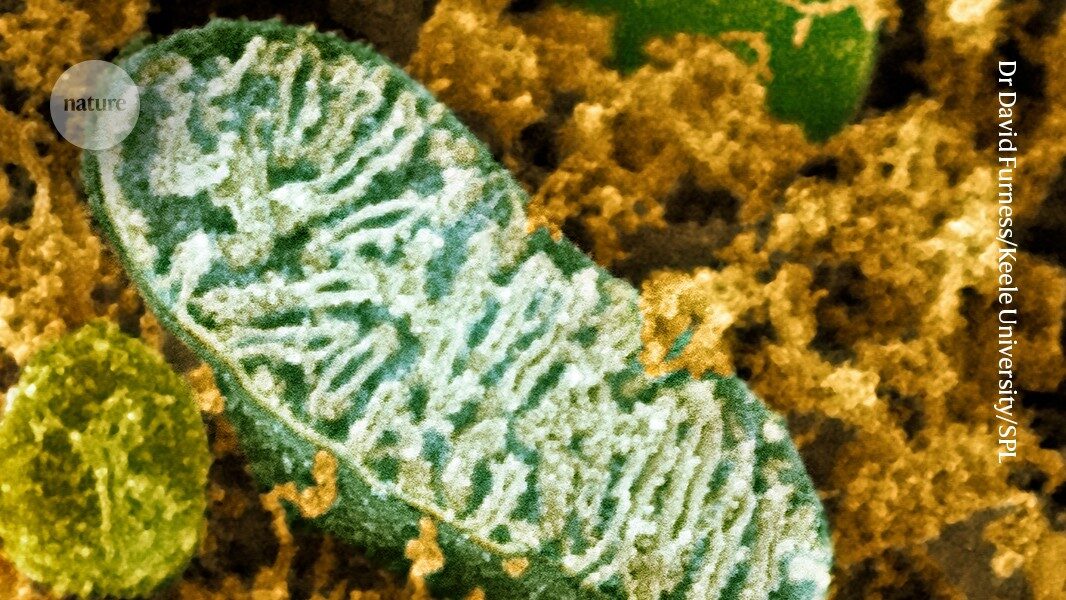
The findings, described in nine papers published in Cell, Cell Press Blue, Molecular Cell and Current Biology on 1 October1'9, reveal dozens of proteins that are not found in humans but are shared among parasites, including some that cause malaria or sleeping sickness. The findings might help scientists to devise new treatments for these illnesses. Best known as the powerhouse of the eukaryotic cell because it produces energy, the mitochondrion has its own tiny DNA, which is distinct from that of the cell's nucleus. But both mitochondrial and nuclear DNA encode the proteins that make up this organelle. Most of what is known about the mitochondria comes from human and yeast studies, says Vamsi Mootha, a mitochondrial biologist at Howard Hughes Medical Institute in Boston, Massachusetts, who led the 'mitoproteome' catalogues project. Mootha and his colleagues analysed the proteome of several parasites, including Giardia lamblia1, which infects about 280 million people worldwide each...
learn more