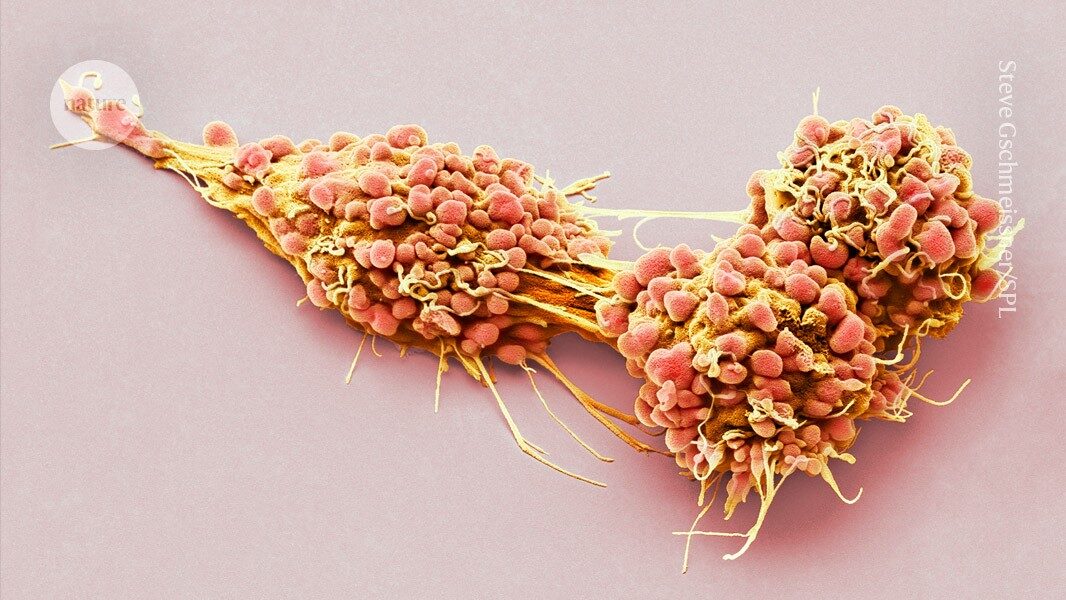
Immune cells engineered to detect extremely low levels of a target antigen have eliminated kidney, ovarian and pancreatic tumours in mice1 ' a feat that has been near impossible using conventional CAR-T immunotherapies. Unlike blood cancers, solid tumours are hard to treat using CAR T cells because the tumours are dense, difficult to access and lack a common antigen target on every cell. At least, that's been the story until now. A paradigm-shifting study published in Science today, overturns this theory by demonstrating that at least one antigen, CD70, is expressed on 100% of cancer cells in some solid tumours. However, it is often expressed at such low levels that the antigens cannot be detected through normal methods. The authors of the study are now planning to seek funding for a phase I safety trial in humans. 'It's a jump,' says Sophie Hanina, an immunologist at Columbia University Irving Medical Center in New York City who spearheaded the research. 'It's targeting the...
learn more