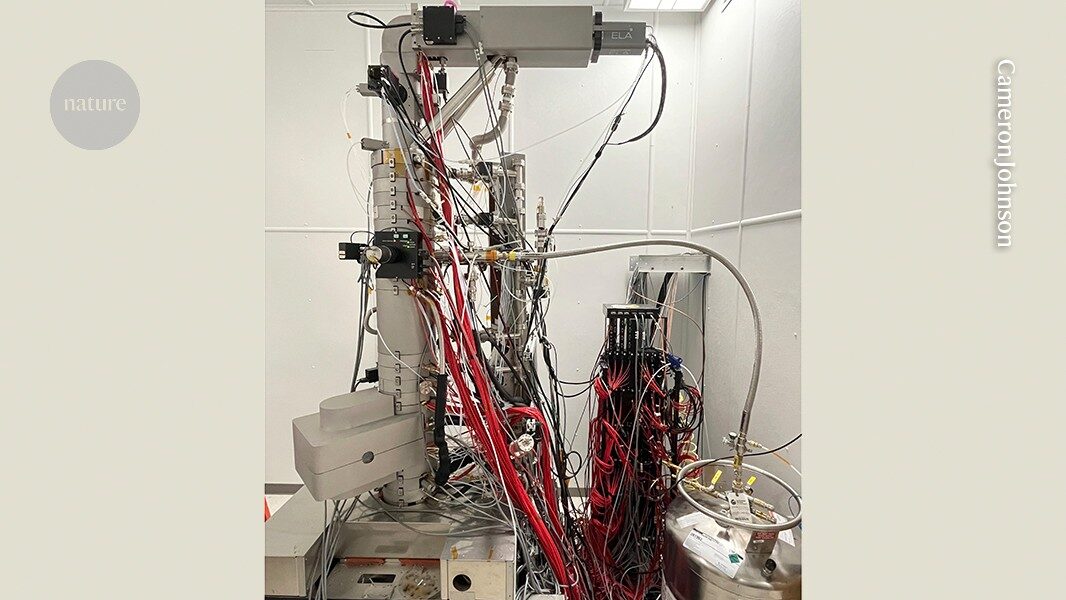
When it comes to imaging materials, the colder the sample is, the better. At room temperature, atoms hum with thermal energy and appear blurry in images, but at ultra-cold temperatures, near absolute zero (0 kelvin), they come almost to a standstill and can even adopt strange quantum behaviours. So, scientists have been on a decades-long quest to adapt some of their most powerful imaging instruments ' transmission electron microscopes (TEMs) ' to work at the coldest temperatures possible. Now, their dreams are finally becoming reality. Last year, researchers in the United States reported1 using an attachment for TEMs that cools samples to as low as '253 'C (20 kelvin) with liquid helium, enabling stable imaging of samples at atomic resolution for more than ten hours. And by early next year, instrument maker Bruker, based in Billerica, Massachusetts, will ship the first-ever scanning transmission electron microscope (STEM) that stably operates near absolute zero using liquid helium...
learn more