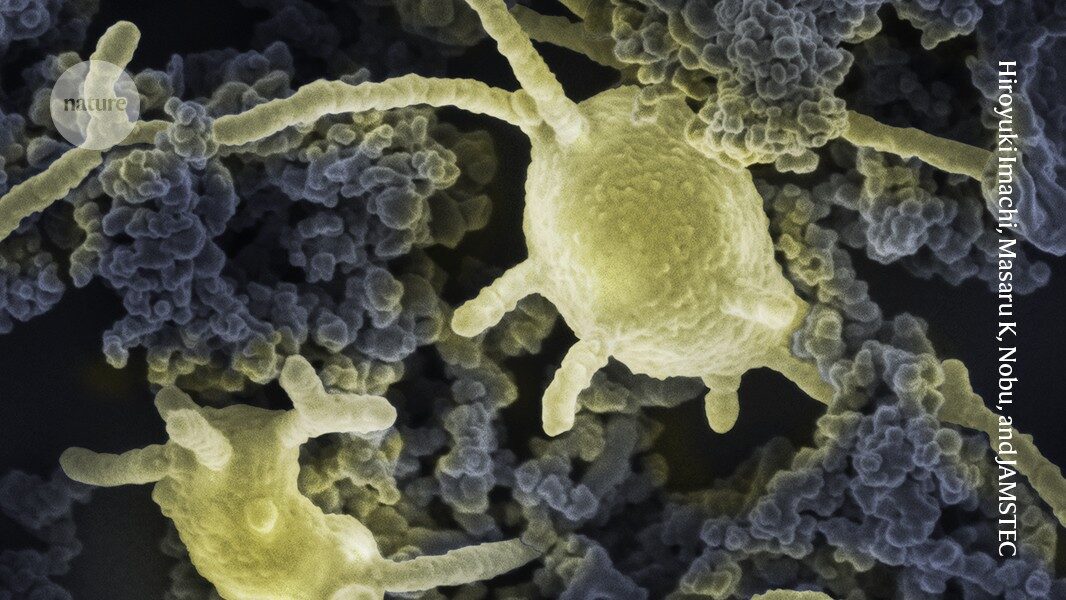
Over two days in June, Emily Aguilar-Pine drove 2,500 kilometres from Bozeman, Montana, to Austin, Texas, with one of microbiology's most coveted organisms in the back of her mother's SUV. Inside some protective packaging, labelled 'hopes and dreams', was a small bottle containing about 30 millilitres of what looked like clear liquid, but that in fact held a type of Asgard archaeon, single-celled organisms named after the realm of the Norse gods. At night, 'Skadi', short for what is provisionally called Skadiarchaeum cthulhuensis, hung out in the hotel room with Aguilar-Pine. 'It was with me at all times,' she says. Researchers discovered Asgard archaea in 2015 from DNA in sediments plucked from the bottom of the North Atlantic1. The find changed scientists' views on the origin of eukaryotes ' the complex life forms that include everything from protists to plants, animals and fungi. Researchers knew that eukaryotes had emerged from prokaryotes, single-celled organisms that include...
learn more