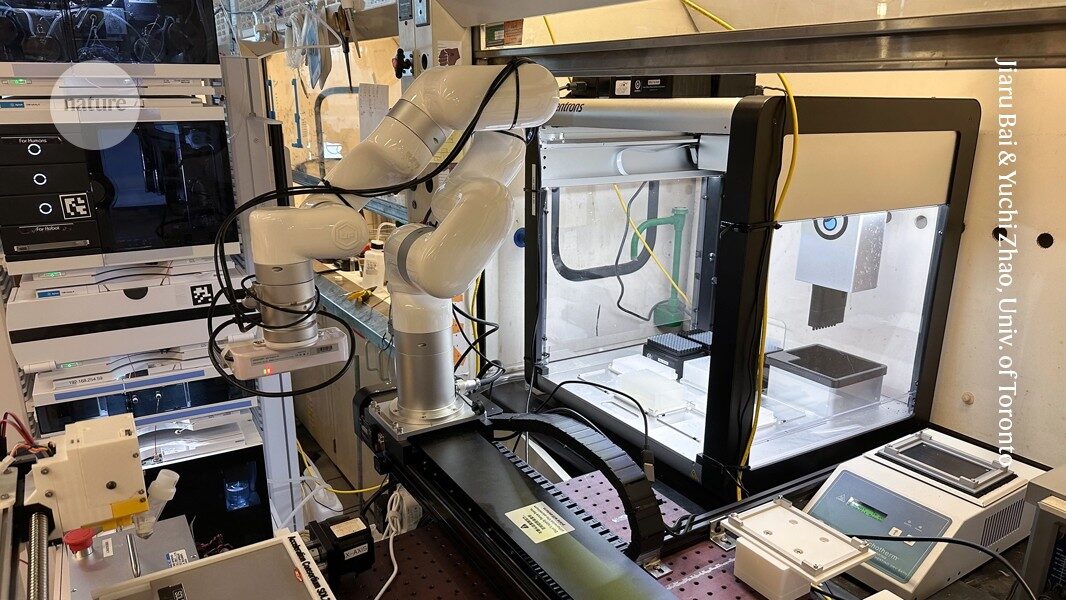
Laboratory robots are tireless and uncomplaining, but they have narrow skill sets, limited mobility and an inability to get out of each other's way. Now, a system of artificial-intelligence agents promises to help lab robots do their best work. In this process, a scientist describes their research programme and lab set-up to the agents, which then create step-by-step experimental protocols for the lab's robots. The agents also generate a virtual version of the lab and test the protocols there. They can then direct the robots in the real lab to perform the research. In a test, the agents wrote more than 200 commands directing a robotic arm to move between and interact with instruments in an existing lab space. The agent simulated the steps in the virtual lab to ensure that it all worked smoothly, then directed the real-life arm to carry out procedures to measure the optical properties of nanocrystals. The concept is 'very cool' and could drastically reduce the effort required to set...
learn more