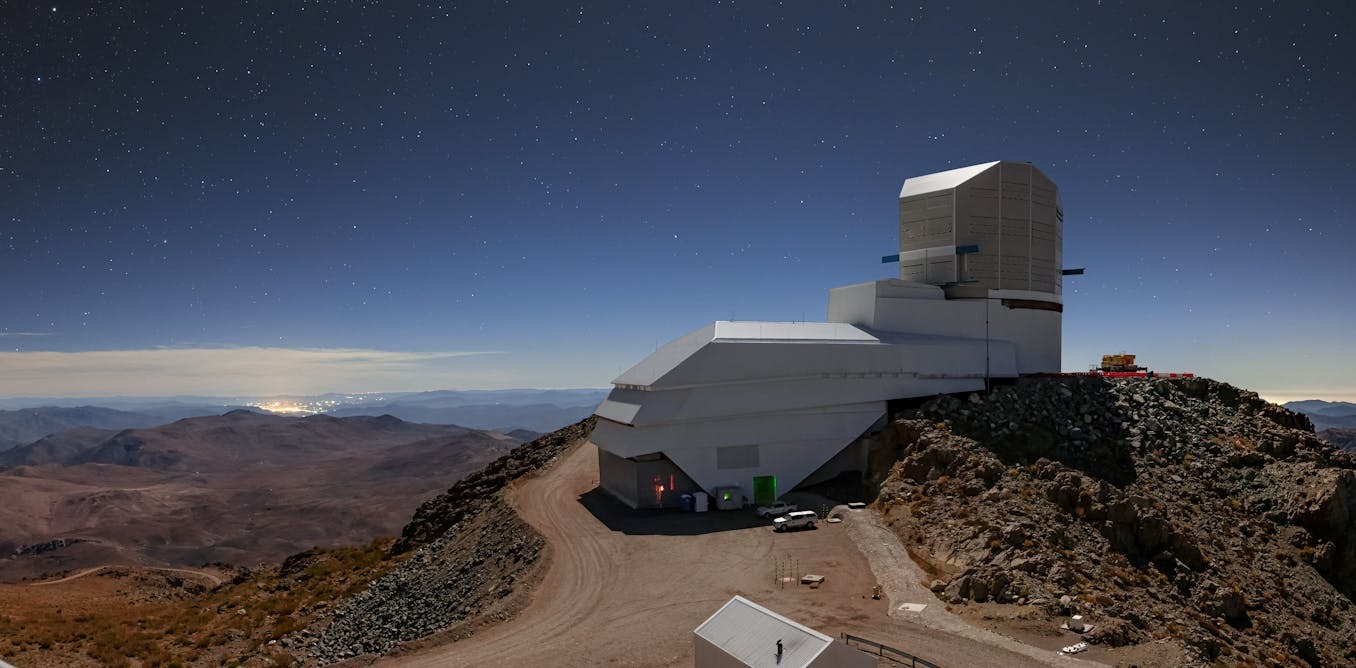
Everything in space ' from the Earth and Sun to black holes ' accounts for just 15% of all matter in the universe. The rest of the cosmos seems to be made of an invisible material astronomers call dark matter. With the release of its first images this month, the Vera C. Rubin Observatory has begun a 10-year mission to help unravel the mystery of dark matter. The observatory will continue the legacy of its namesake, a trailblazing astronomer who advanced our understanding of the other 85% of the universe. As a historian of astronomy, I've studied how Vera Rubin's contributions have shaped astrophysics. The observatory's name is fitting, given that its data will soon provide scientists with a way to build on her work and shed more light on dark matter. From its vantage point in the Chilean Andes mountains, the Rubin Observatory will document everything visible in the southern sky. Every three nights, the observatory and its 3,200 megapixel camera will make a record of the sky. This...
learn more