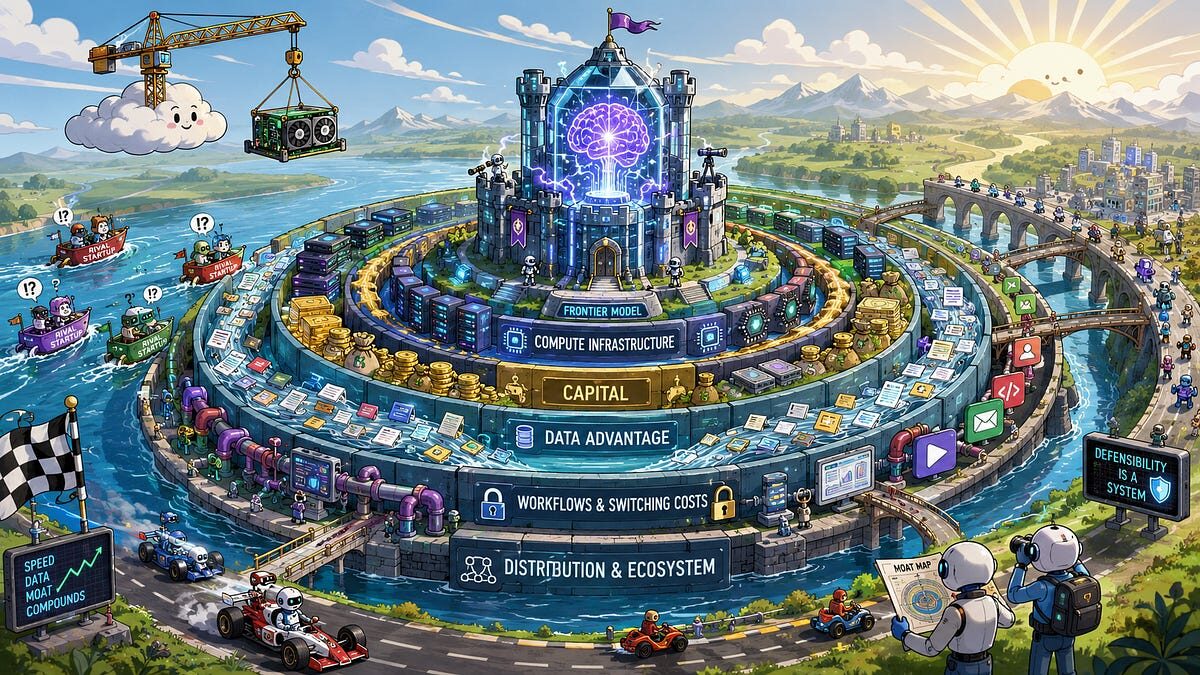
Imagine that an AI lab spends several billion dollars assembling chips, power, researchers, and data. It trains the best model in the world. The benchmarks move. Developers migrate. The launch becomes an industry event. Then the strange thing happens. Six months later, another lab reaches roughly the same capability. An open model offers most of it at a fraction of the price. Distillation compresses parts of the original behavior into smaller systems. A router quietly begins sending each query to whichever model is cheapest or best that morning. Hamilton Helmer's Seven Powers framework is useful here because it separates a good product from a durable business. Power requires two things: a benefit and a barrier. You need a castle worth defending, but you also need something that prevents competitors from walking through the front door. AI is unusually good at manufacturing castles. Scaling laws have made capability partially predictable: add compute, data, and engineering, and...
learn more