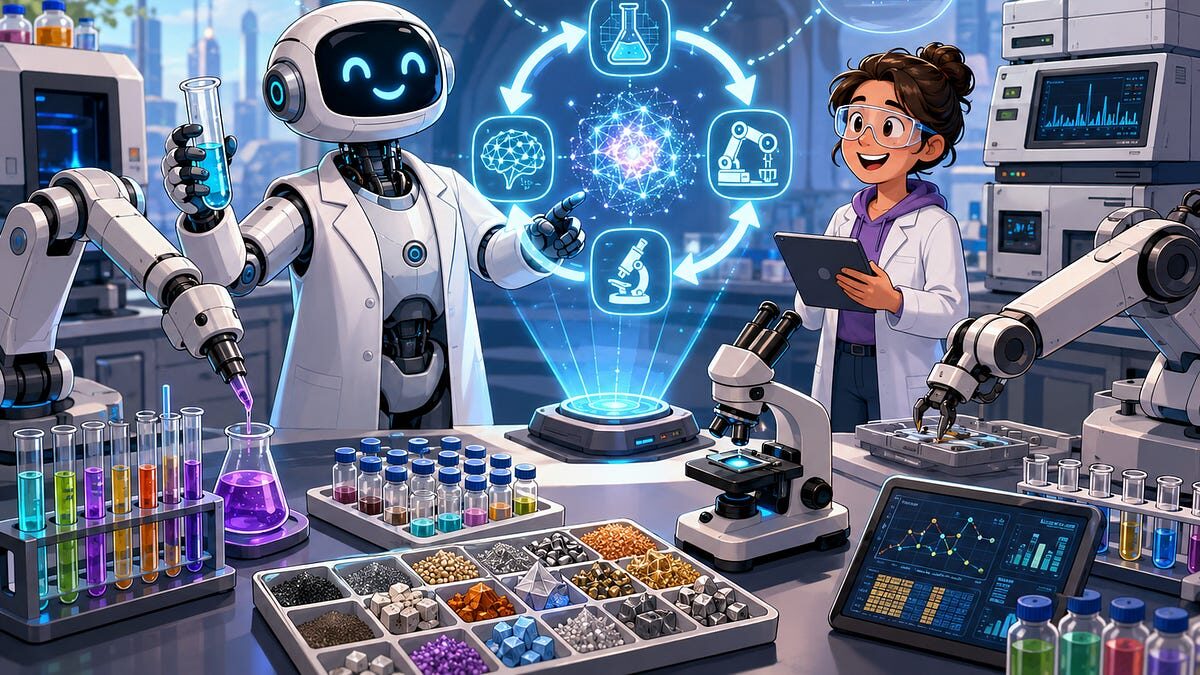
A normal laboratory is already a kind of computer. It has sensors, actuators, memory, protocols, data outputs and error states. But the operating system is usually a human scientist. The scientist decides what to test, transfers samples between instruments, inspects the results, updates their mental model and chooses the next experiment. The basic idea is simple: connect AI to automated experimental hardware, then let the results of each experiment influence what the system does next. The lab is not just running a long queue of prewritten instructions. It is learning while it works. It makes something, measures it, updates a model and chooses the next move. This is the key distinction between automation and autonomy. An automated liquid handler can pipette 10,000 wells according to a script. A self-driving lab can run the first few hundred experiments, notice that most of the remaining design space looks unpromising and redirect itself toward better candidates. Automation executes....
learn more