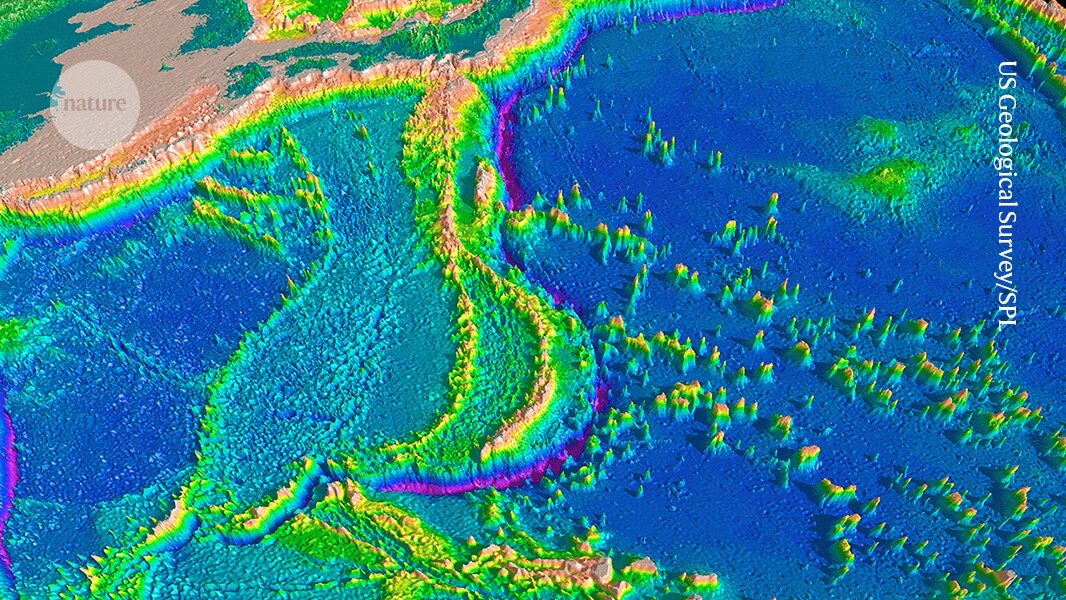
The ocean's depths are among the ultimate frontiers for scientific exploration. Scientists have visually surveyed less than 0.001% of the sea floor, yet oceanography is essential to understanding the climate, ecosystems and processes of deep Earth ' including earthquakes and the resulting tsunamis. Now, emerging technologies, including advanced drilling technologies, seismic sensors and methods to convert deep-sea cables into a giant seismic-surveillance network, are poised to crack open these mysteries. Plate tectonics is driven by convection, or the churning of the mantle ' the layer of mostly solid rock under Earth's crust that makes up more than 80% of the planet's volume. But the mantle's inner geological workings remain mostly a mystery. Researchers have begun to map the process of convection by measuring how different rock densities affect the propagation of seismic waves ' using ocean-bottom seismometers (OBSs) that can run on batteries for one year or more. OBS studies have...
learn more