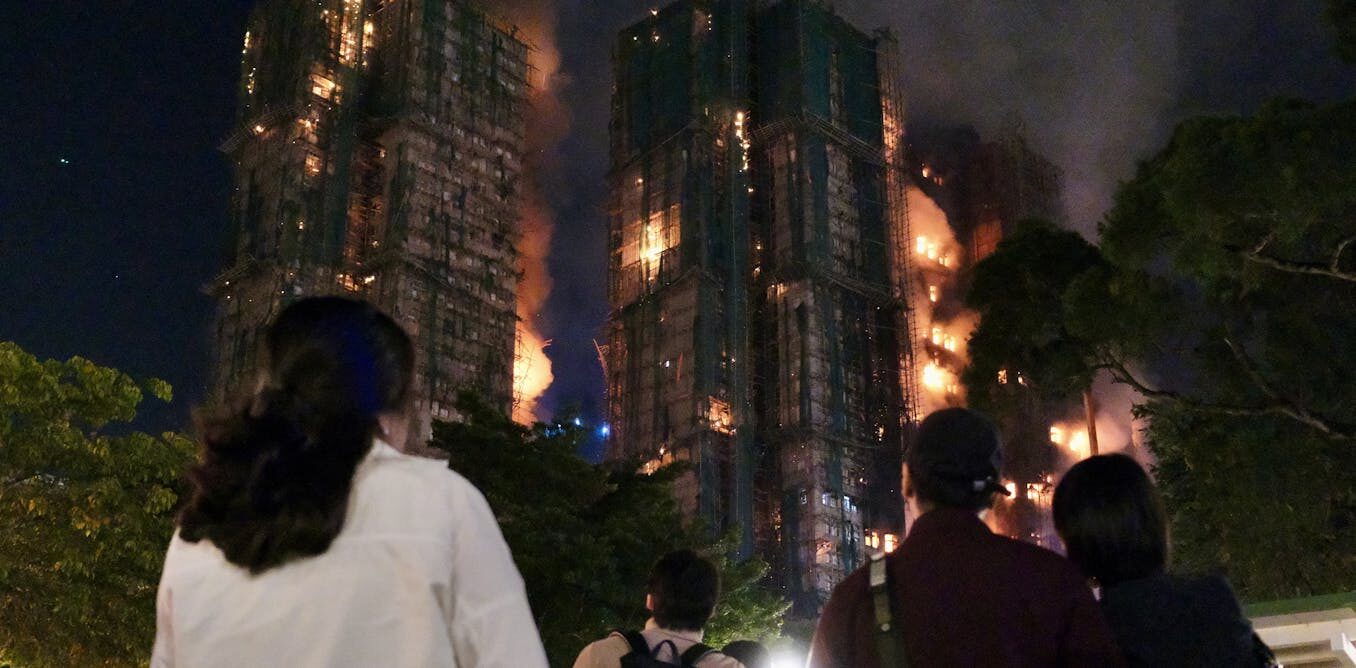
This catastrophic fire ' which is thought to have spread from building to building via burning bamboo scaffolding and fanned by strong winds ' highlights how difficult it is to evacuate high-rise buildings in an emergency. Evacuations of high-rises don't happen every day, but occur often enough. And when they do, the consequences are almost always severe. The stakes are highest in the buildings that are full at predictable times: residential towers at night, office towers in the day. Stair descent in real evacuations is far slower than most people expect. Under controlled or drill conditions people move down at around 0.4'0.7 metres per second. But in an actual emergency, especially in high-rise fires, this can drop sharply. Fatigue is a major factor. Prolonged walking significantly reduces the speed of descent. Surveys conducted after incidents confirm that a large majority of high-rise evacuees stop at least once. During the 2010 fire of a high-rise in Shanghai, nearly half of...
learn more