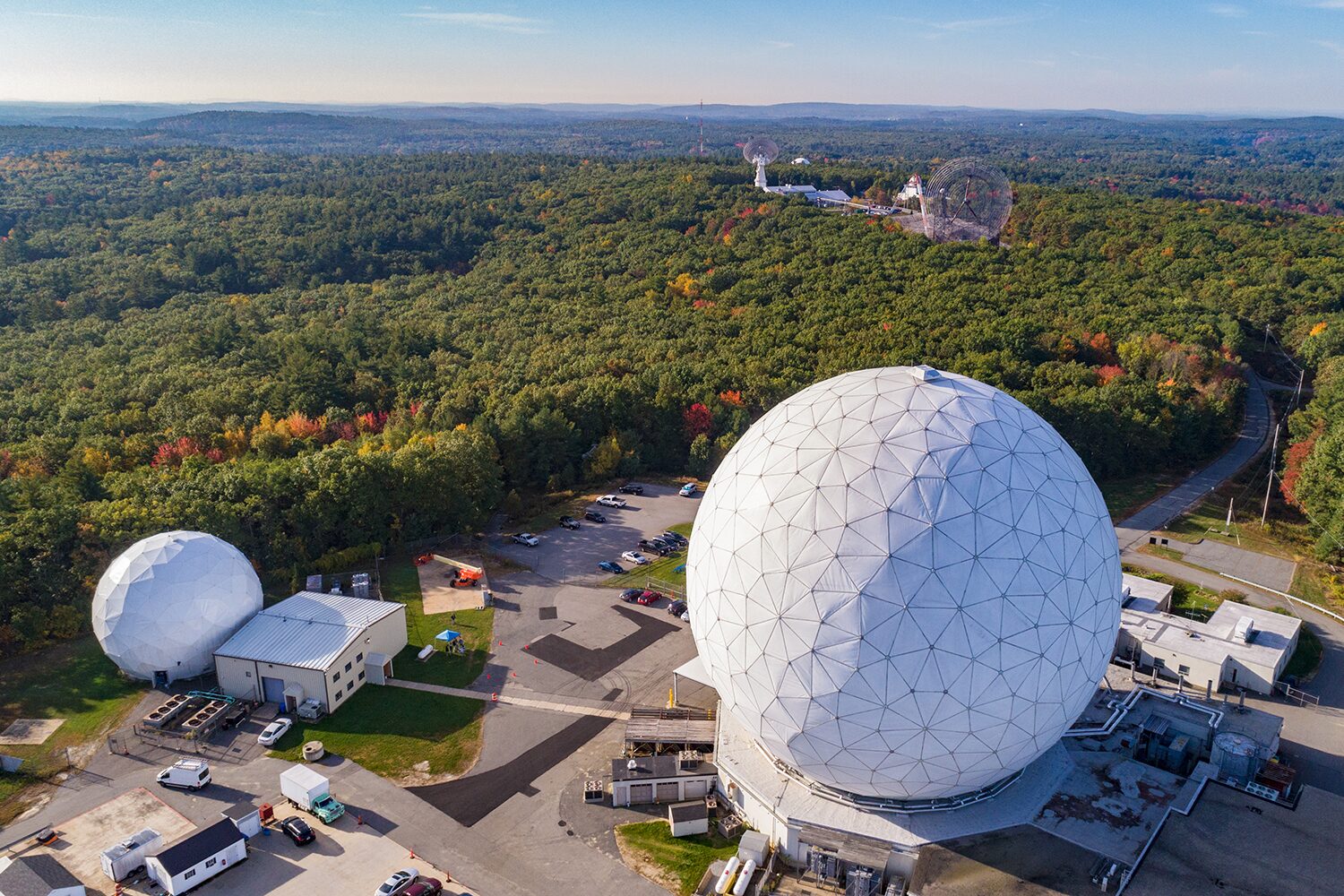
The Haystack 37m Telescope has been a landmark in radio astronomy and radar studies of the solar system since its first light in 1964. Over the following four decades, it supported NASA's Apollo landings on the moon, made planetary radar maps of the surface of Venus, contributed to experimental tests of Einstein's general relativity, supported the development of VLBI, and conducted foundational studies of quasars and star-forming regions. Recently, the Haystack 37m Telescope ' a 37-meter radio and millimeter-wavelength antenna at MIT Haystack Observatory in Westford, Massachusetts ' made its return to front-line astronomical research following an extended period of system upgrades. These observations reconnect this instrument with its long tradition of scientific discovery and open a new chapter. On Dec. 8, 2025, Haystack scientists observed the supermassive black hole system at the center of the galaxy Messier 87 (M87) using a technique called very long baseline interferometry...
learn more