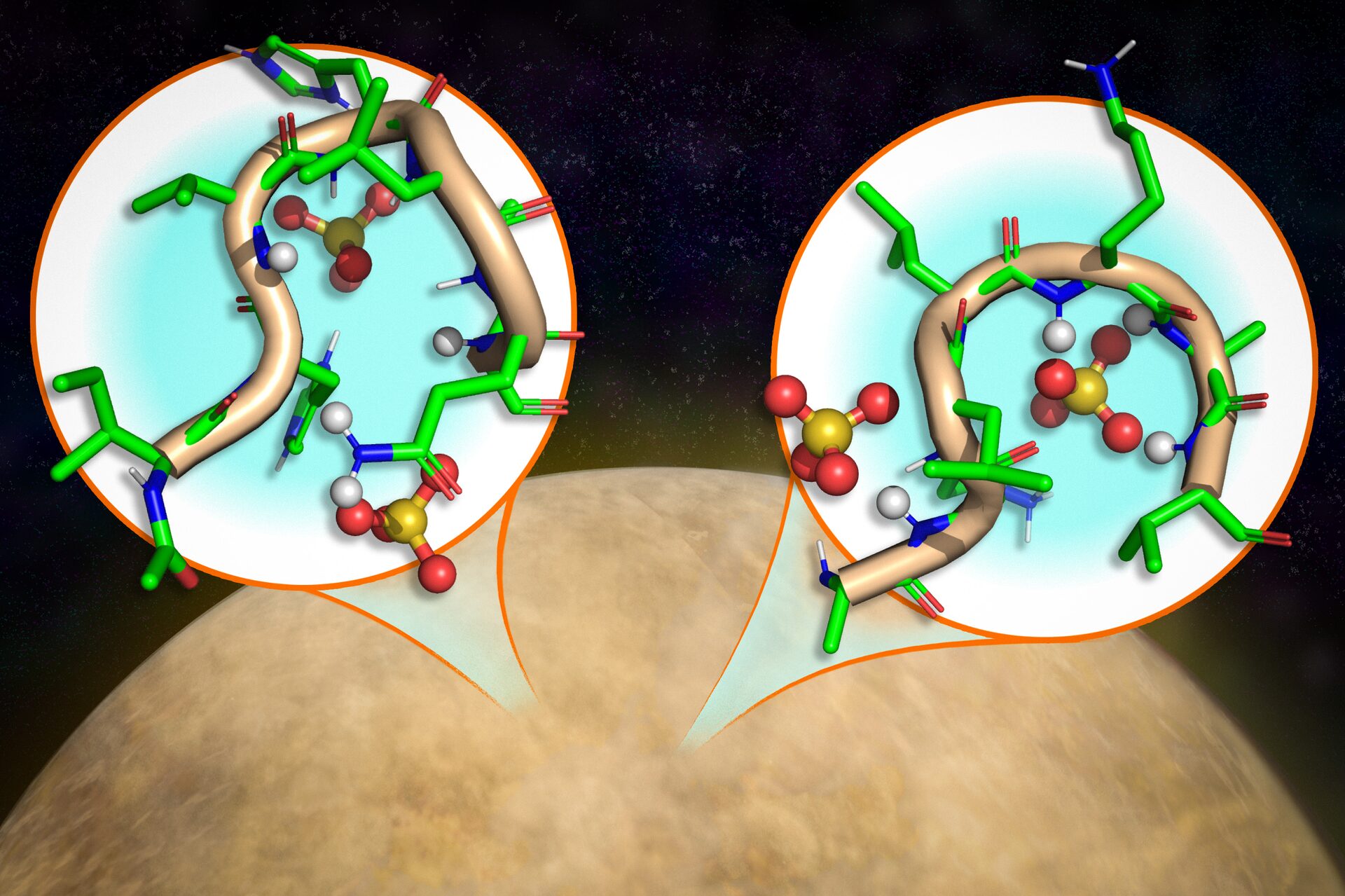
When exploring solar system bodies for signs of past or present life, scientists have mainly focused on planets that have (or had) a liquid surface similar to Earth's. However, mounting evidence suggests that the ingredients for life may exist in a very different environment: the highly acidic clouds that blanket Venus. Those clouds are made up of about 98 percent sulfuric acid, which scientists had believed to be too acidic for complex biological molecules to survive. But in a new study, MIT researchers have shown that short peptides can not only remain stable in these extremely acidic conditions, they can also fold into shapes that may allow them to have biological functions. 'If peptides find their way to that cloud layer of concentrated sulfuric acid, they will stay and be stably preserved in that cloud of droplets. And once these macromolecules have a defined three-dimensional structure, they can potentially have a function,' says Mei Hong, an MIT professor of chemistry and one...
learn more