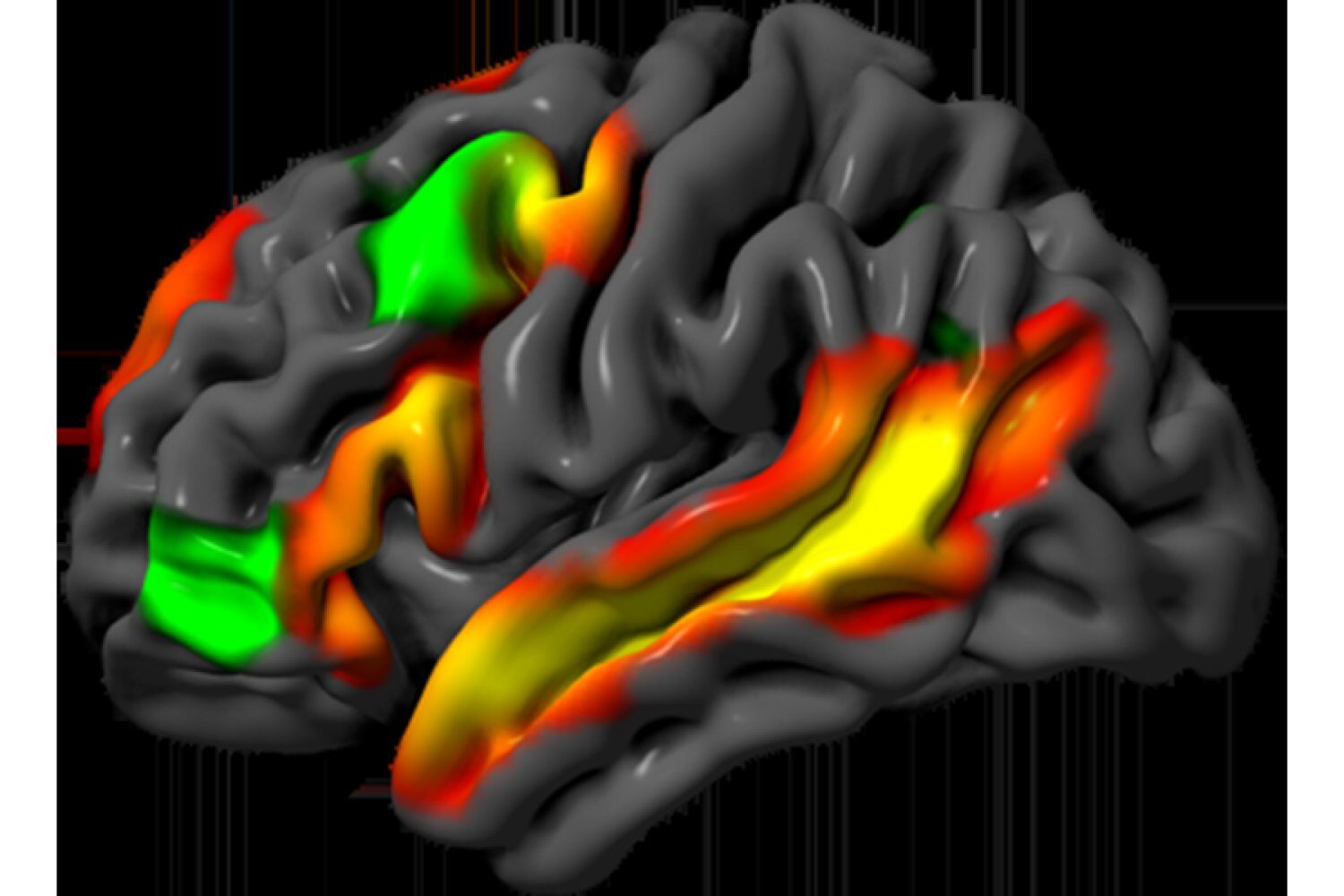
In research published this week in the journal PNAS, researchers led by MIT associate professor of brain and cognitive sciences Evelina Fedorenko have shown that people can perform well on tasks that require logical reasoning even if their language abilities are severely impaired. What's more, brain imaging shows that language-processing parts of the brain are not called on for logical reasoning. Philosophers, linguists, and cognitive scientists have debated the relationship between language and thought for thousands of years, with many arguing that we use language to think. There are good reasons to suspect a close relationship between logic and language, acknowledges Hope Kean, a postdoc and former K. Lisa Yang Integrative Computational Neuroscience (ICoN) Center graduate fellow in Fedorenko's lab. 'Abstract thinking has properties that look a lot like language,' Kean says, pointing to structural similarities. 'You can decompose a thought into subcomponents, like little atoms of...
learn more