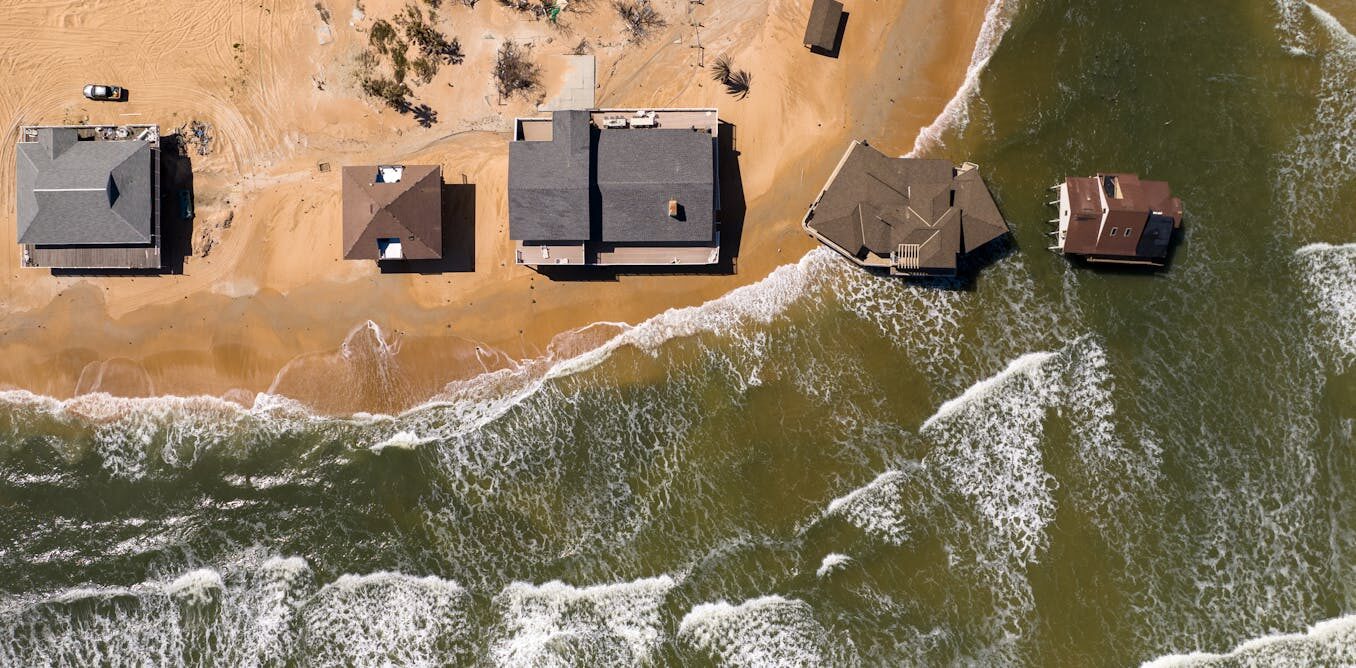
In a new study, our team of scientists investigated how ice melting in Antarctica affects global climate and sea level. We combined computer models of the Antarctic ice sheet, solid Earth and global climate, including atmospheric and oceanic processes, to explore the complex interactions that melting ice has with other parts of the Earth. Understanding what happens to Antarctica's ice matters, because it holds enough frozen water to raise average sea level by about 190 feet (58 meters). As the ice melts, it becomes an existential problem for people and ecosystems in island and coastal communities. The extent to which the Antarctic ice sheet melts will depend on how much the Earth warms. And that depends on future greenhouse gas emissions from sources including vehicles, power plants and industries. Studies suggest that much of the Antarctic ice sheet could survive if countries reduce their greenhouse gas emissions in line with the 2015 Paris Agreement goal to keep global warming to...
learn more