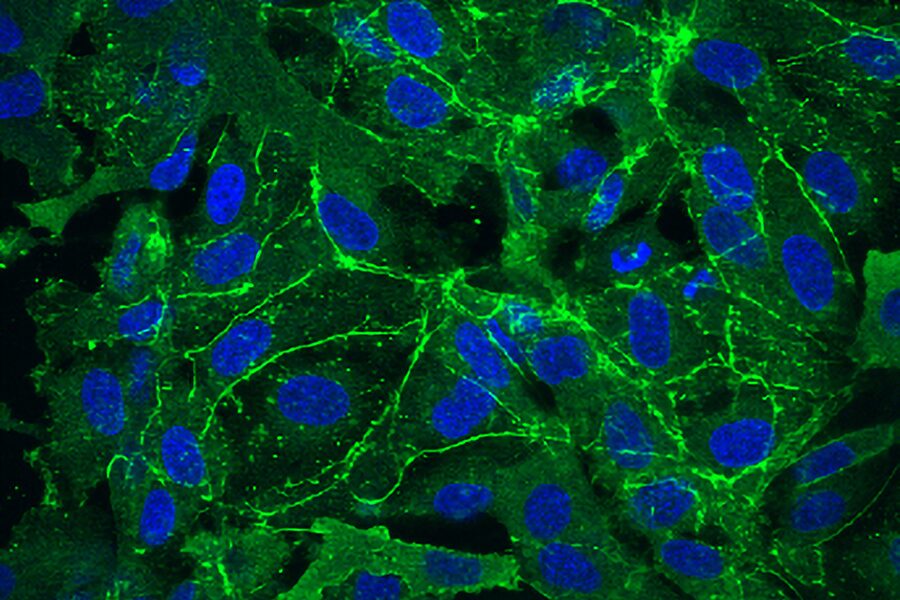
MIT researchers have discovered that two common genetic mutations that cause Rett syndrome each set off a molecular chain of events that compromises the structural integrity of developing brain blood vessels, making them leaky. The study traces the problem to overexpression of a particular microRNA (miRNA-126-3p), and shows that tamping down the miRNA's levels helps to rescue the vascular defect. Rett syndrome is a severe developmental disorder affecting both the brain and body. It is caused by various mutations in the widely expressed MECP2 gene, but the first symptoms don't become apparent until affected children (mostly girls) reach 2-3 years of age. Because that's a critical time in development for the brain's blood vessels, neuroscientists in The Picower Institute for Learning and Memory at MIT embarked on a study to model how two common but distinct MeCP2 mutations may affect vascular development and contribute to the disease's profound neurological pathology. To conduct the...
learn more