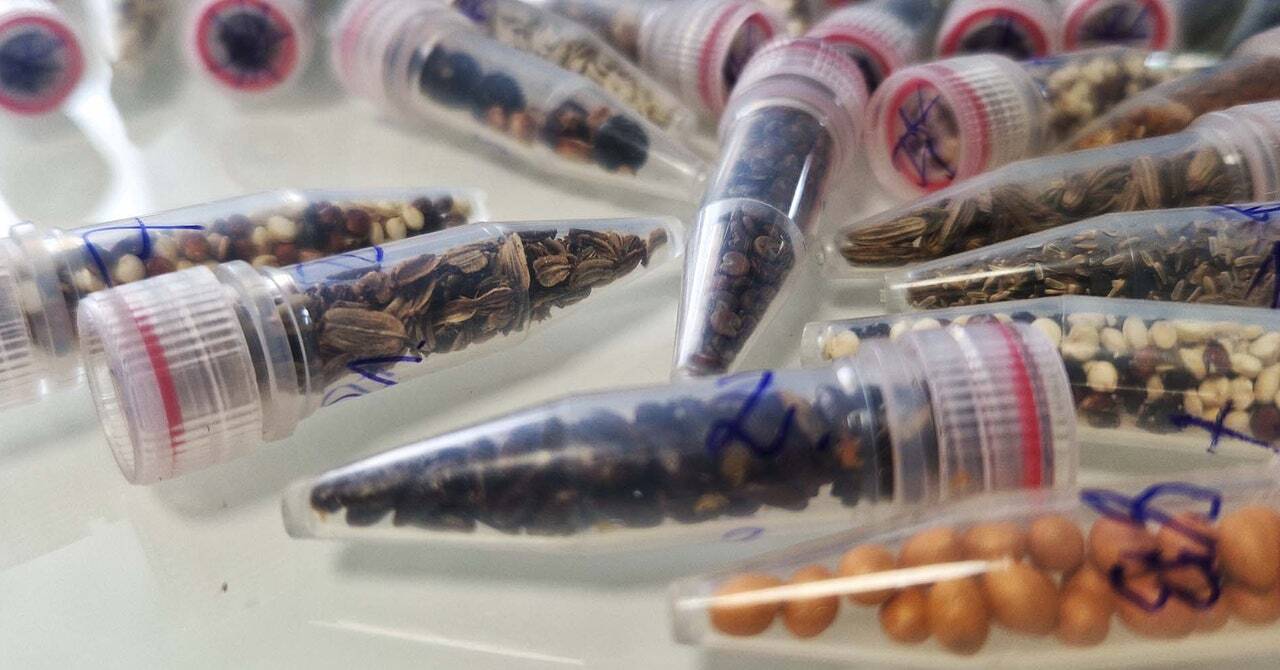
On Monday, June 23, shortly after 9 pm UTC, hundreds of seeds, fungi, algae, and human DNA samples, many of which have never been exposed to space before, will make their maiden voyage aboard a SpaceX Falcon 9 rocket. Launching from Vandenberg Space Force Base in California, the mission is hoping to be the first to send plant tissues and seeds into a polar low Earth orbit and back, to allow scientists to study how biological systems are affected by the harsh levels of radiation found high above Earth's poles. The information they glean, researchers hope, could one day help spacefarers grow crops on other planets. The samples will travel in a small biological incubator called MayaSat-1, developed by the Genoplant Research Institute, a Slovenian aerospace company specializing in space-based biological research. At an altitude above 500 kilometers, the incubator, housed inside a larger capsule, will cross zones near the North and South poles where concentrations of charged particles...
learn more