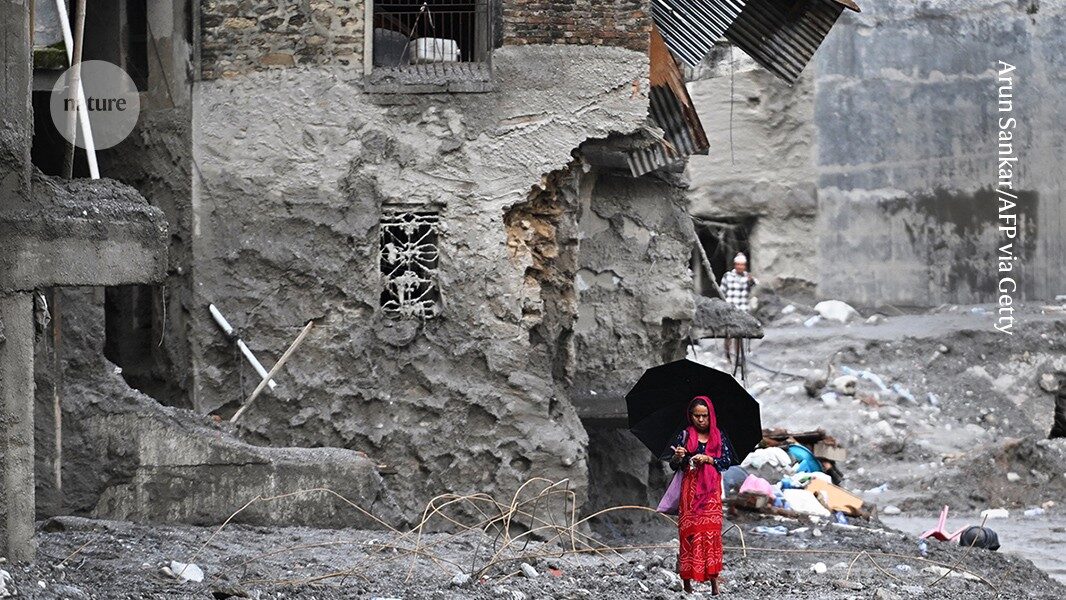
The high-altitude collapse of rock and ice that triggered a catastrophic flash flood near the Nepal'Tibet border on 26 August has so far claimed more than 1,000 lives. More than 4,000 people remain missing. Manoochehr Shirzaei, a geophysicist at Virginia Tech in Blacksburg, says that satellite images from just days before the disaster suggest that a section of the glacier and the rocks it sat on top of were accelerating in the weeks before the collapse, a concerning sign of an unstable system. The precise sequence of events remains unclear. The disaster might have begun with a massive rockslide that dragged part of the glacier downhill, or the glacier might have failed first, causing rocks to destabilize into a landslide. As Shirzaei tells Nature, such an event is difficult to predict using existing monitoring techniques. What is needed are systems that can detect glacier and rock collapses that pose cascade risks and can result in landslides and downstream flooding, he says. It was...
learn more