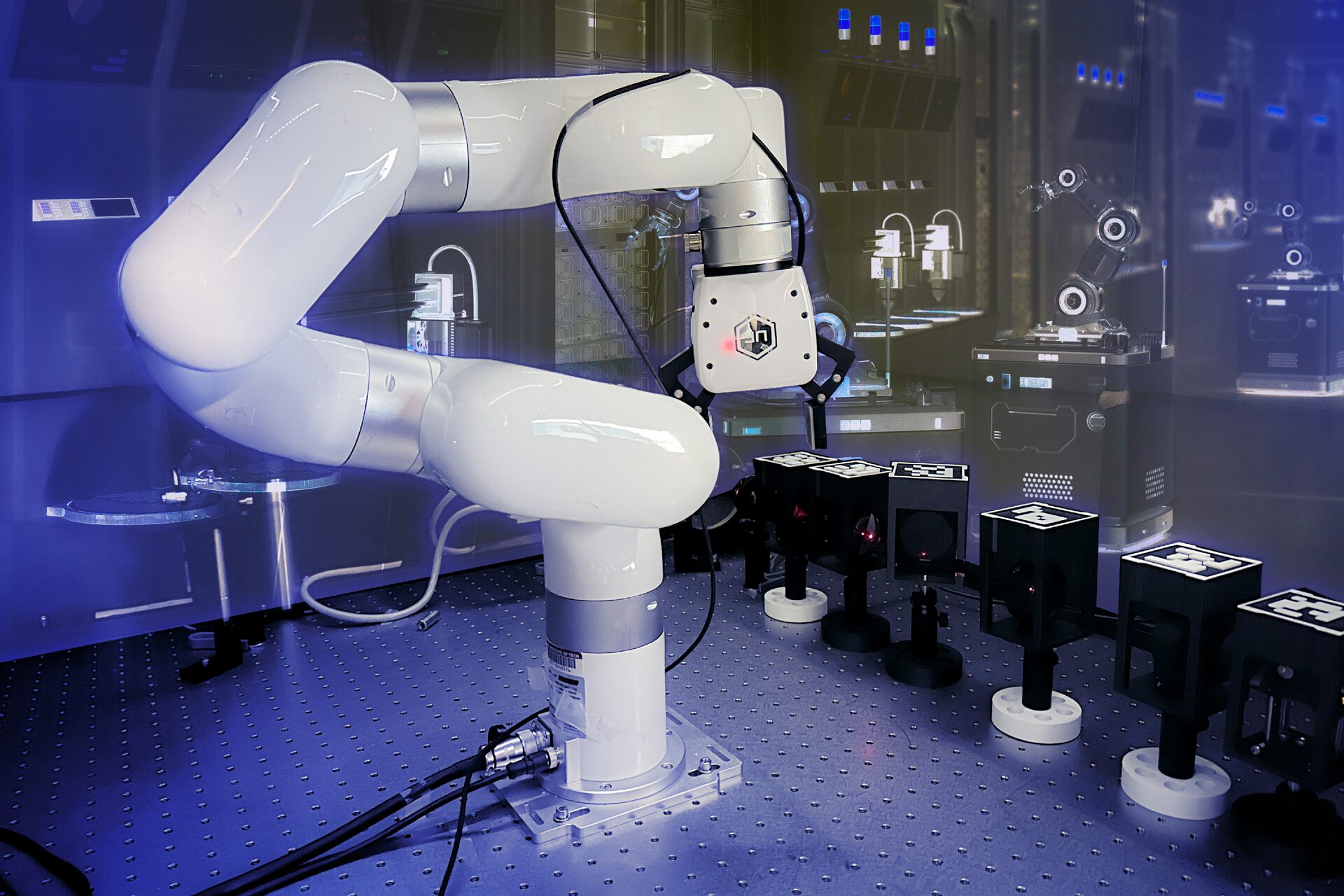
Every new generation of phone display, television screen, and solar panel is a result of precision optics experiments, which use lasers and other light sources to measure the optical properties of candidate materials. These experiments can take months to run, requiring scientists to meticulously angle and adjust delicate light sources, mirrors, cameras, and other components, in a careful and constant tuning that can be physically tedious and time-consuming. But MIT scientists say the whole process of building and running an optics experiment could one day be fully automated. Taking a step toward such a future, they have developed a reconfigurable, robotic optics laboratory. The new robotic lab autonomously assembles standard optical components into desired configurations. It can then tune the angle and position of mirrors and lenses with micron-scale precision to produce beams of light with specific properties. The system can also safely dismantle an experiment and reassemble the...
learn more