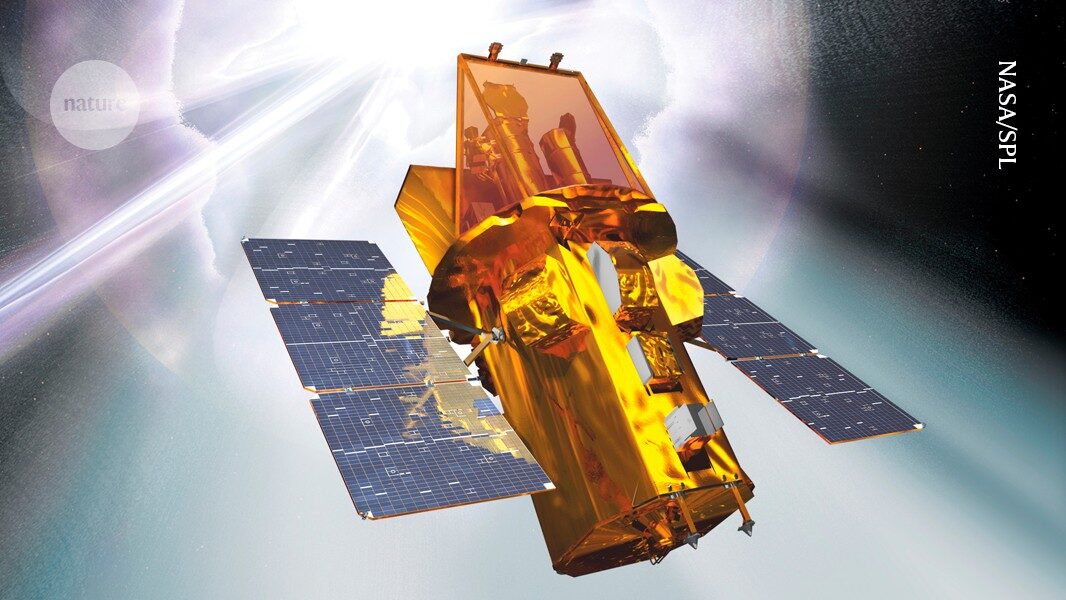
The Swift observatory was designed to observe the brilliant explosions called gamma ray bursts (artist's illustration) but branched out to study black holes, supernovae and comets.Credit: NASA/Science Photo Library Having spent almost 22 years in orbit, NASA's Neil Gehrels Swift Observatory has been slowly losing altitude over time, but now it must fully succumb to its doom. In July, a spacecraft blasted off on a mission to boost Swift out of danger. But the rescue mission began to spin uncontrollably before reaching its target. Eventually Swift drifted so low that it could not lock onto its astronomical targets, and last week, NASA shut off science operations ahead of its impending skyfall. Astronomers are mourning the spacecraft, which has had a glittering career observing everything from black holes to gamma-ray bursts, the most powerful explosions in the Universe. 'We're all definitely very sad. There's definitely grief,' says Caryl Gronwall, Swift's science operations team lead...
learn more