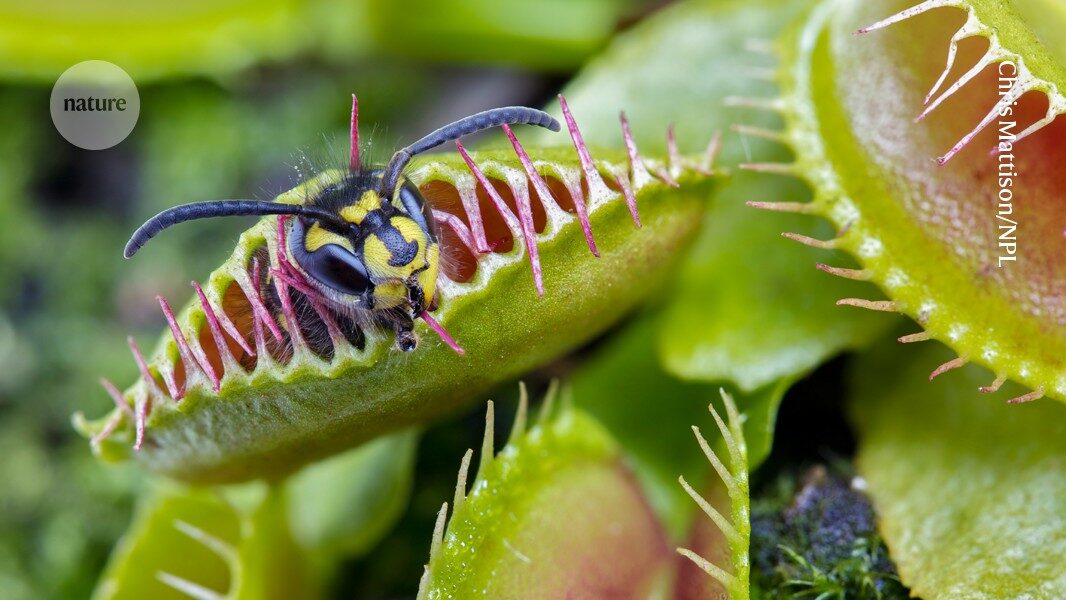
Ever since renowned biologist Charles Darwin proclaimed in 1875 that the carnivorous Venus flytrap was one of the 'most wonderful' plants in the world, scientists have been trying to work out how it snaps shut so quickly on its prey. Plants are not known for their speed, but the flytrap (Dionaea muscipula) closes in less than a second. A research team has now snapped a key piece of the puzzle in place. Experiments showed that, after an insect crawls into the flytrap's maw, cells on the outer surface of the hinged leaf that forms the plant's 'mouth' soften. This allows the leaf to change shape and hinge shut, the researchers report today in Science1. 'This is a breathtaking, very elegant paper,' says biomechanics researcher Simon Poppinga, director of the botanical garden at the Technical University of Darmstadt in Germany. Plants can relax the rigid outer walls of their cells to enable growth, but that process happens over a much slower timescale than the flytrap's snap, says...
learn more