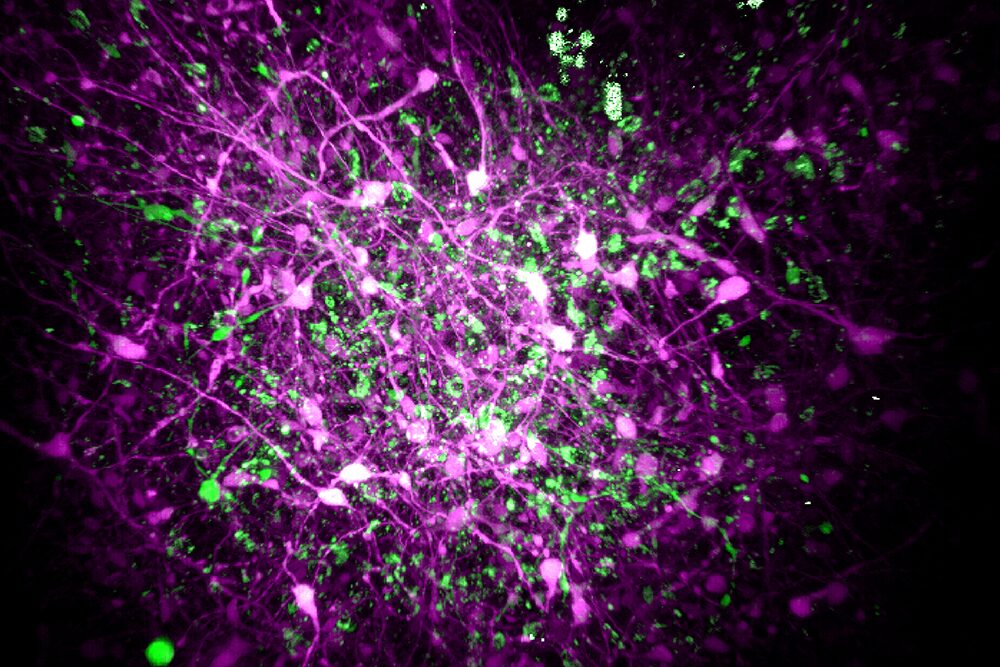
Although many studies approach the developmental disorder Rett syndrome as a single condition arising from general loss of function in the gene MECP2, a new study by neuroscientists in The Picower Institute for Learning and Memory at MIT shows that two different mutations of the gene caused many distinct abnormalities in lab cultures. Moreover, correcting key differences made by each mutation required different treatments. 'Individual mutations matter,' says Mriganka Sur, senior author of the new open-accdess study in Nature Communications and the Newton Professor in the Picower Institute and the Department of Brain and Cognitive Sciences. 'This is an approach to personalizing treatment, even for a single-gene disorder.' The study employed advanced 3D human brain tissue cultures called 'organoids' or 'minibrains' derived from skin cells or blood cells donated by Rett syndrome patients with each mutation. Lead author Tatsuya Osaki, a Picower Institute research scientist, says that...
learn more