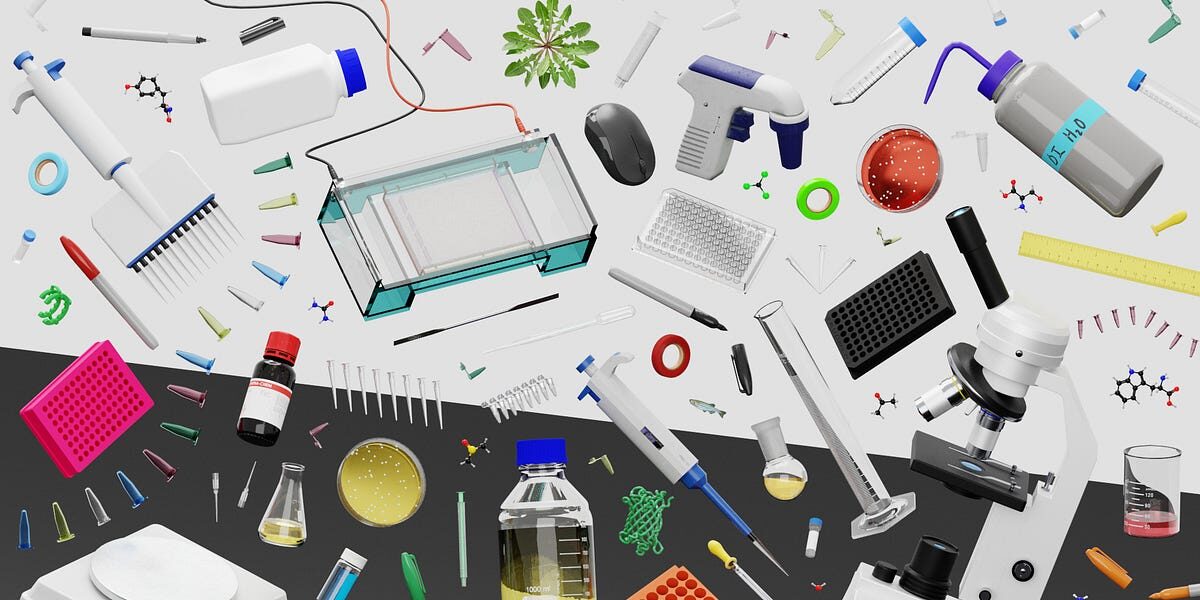
If you were to revisit photos of Howard Berg's cramped Harvard lab, where the details of bacterial chemotaxis were first worked out, or Sydney Brenner's Cambridge lab, where they cracked the genetic code, you'd recognize almost everything you saw. In both, glass bottles of reagents, racks of disposable plastic tips, and half-empty boxes of parafilm wrap cluttered the benches. pH meters dangled coils of cords next to old Gilson pipettes, resting on their sides. Ice buckets held a jumble of tubes, labels fading into illegibility. A tabletop centrifuge hummed in the corner, its brushed-metal body dented from hard use. Even the smell, if you could step inside the frame, would be familiar ' likely a faint mix of ethanol and agar. People commonly point to this seeming stagnation in laboratory design while opining on how laboratories of the future ought to look. We clearly need to update our equipment, especially as AI and computational tools advance. But in many respects, the fact that...
learn more