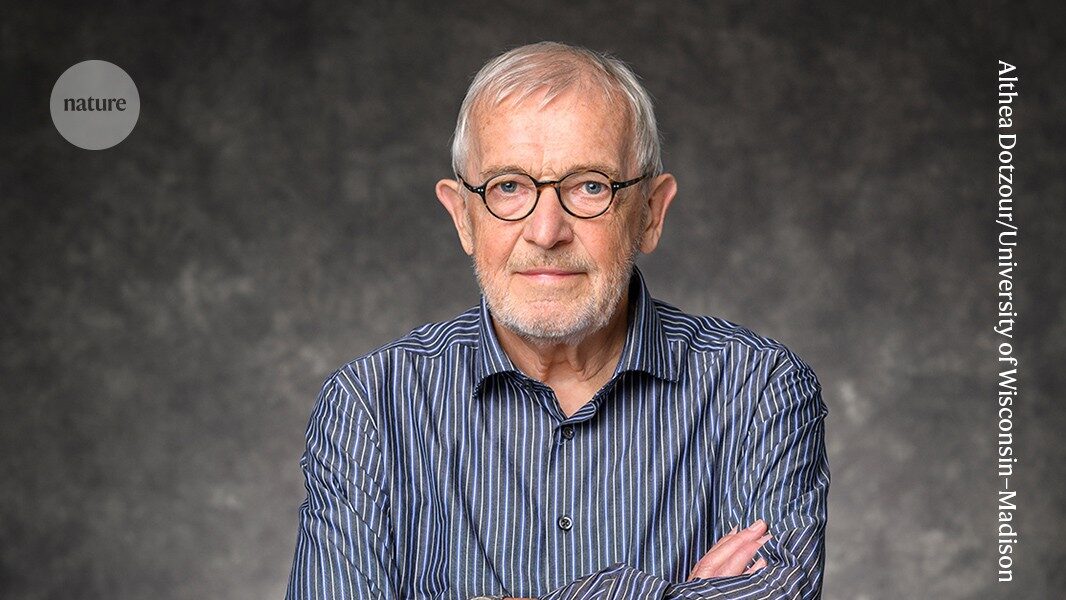
His pioneering contribution is the founding of a giant detector, the IceCube Neutrino Observatory, at the South Pole. Its results have helped to found the fields of neutrino and multimessenger astronomy, which help physicists to unlock the mysteries of the Universe through observing highly energetic events from deep in the cosmos. Halzen, who is based at the University of Wisconsin'Madison, takes home all of the 12-million Swedish kronor (US$1.2-million) prize, announced by the Royal Swedish Academy of Sciences in Stockholm on 6 October. It is the first time since 1992 that the the physics prize has been awarded to only one winner. 'It was a great surprise and I obviously didn't expect it,' said Halzen, speaking to the Nobel press conference after the prize was announced. 'This reflects on the really courageous people who joined me in this project when really no respectable conservative physicist would have joined me, but many talented people did and that's why I'm here.' Neutrinos...
learn more