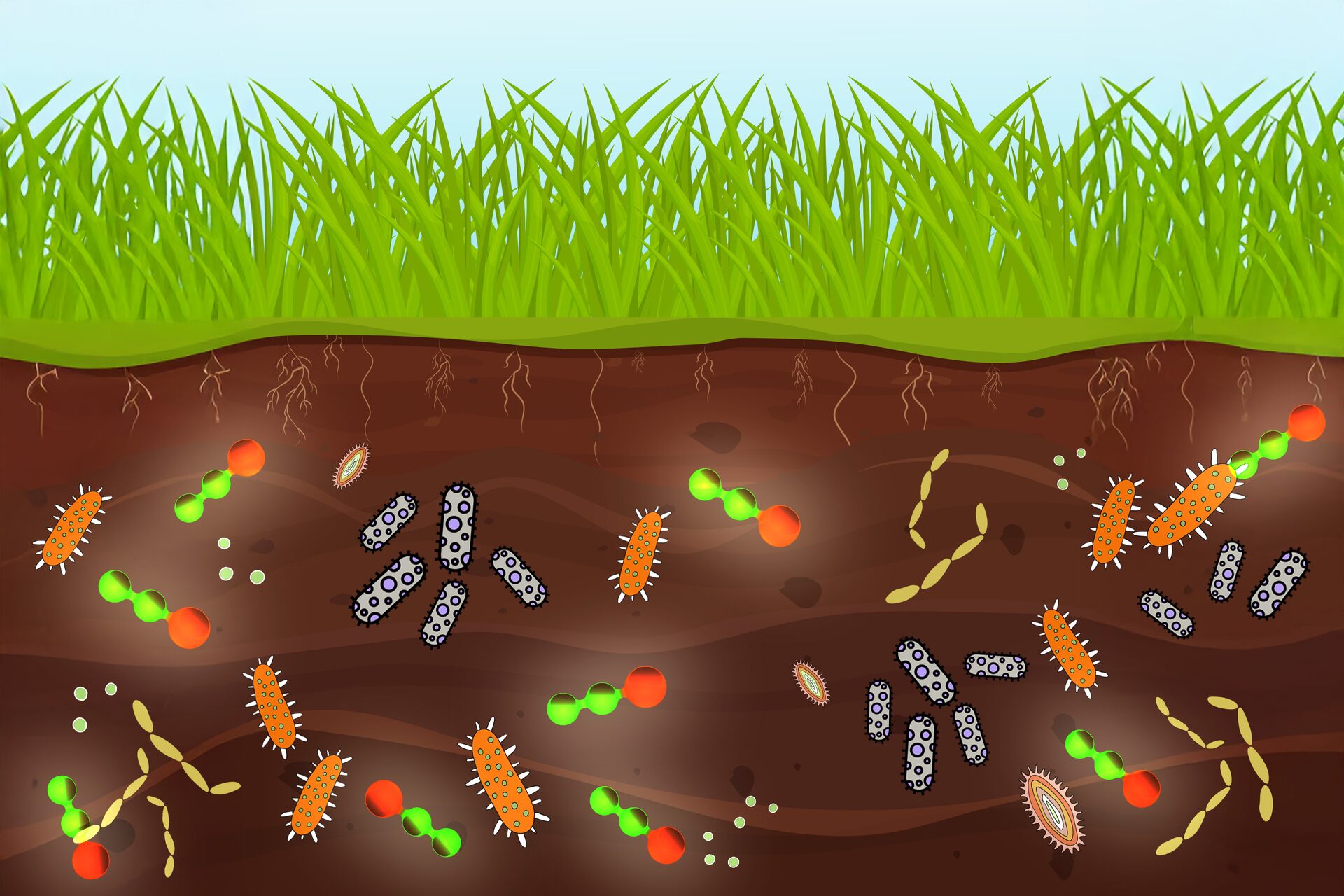
Plant growth is supported by millions of tiny soil microbes competing and cooperating with each other as they perform important roles at the plant root, including improving access to nutrients and protecting against pathogens. As a byproduct of their metabolism, soil microbes can also produce nitrous oxide, or N2O, a potent greenhouse gas that has mostly been studied for its impact on the climate. While some N2O occurs naturally, its production can spike due to fertilizer application and other factors. While it has long been believed that nitrous oxide doesn't meaningfully interact with living organisms, a new paper by two MIT researchers shows that it may in fact shape microbial communities, making some bacterial strains more likely to grow than others. Based on the prevalence of the biological processes disrupted by nitrous oxide, the researchers estimate about 30 percent of all bacteria with sequenced genomes are susceptible to nitrous oxide toxicity, suggesting the substance...
learn more