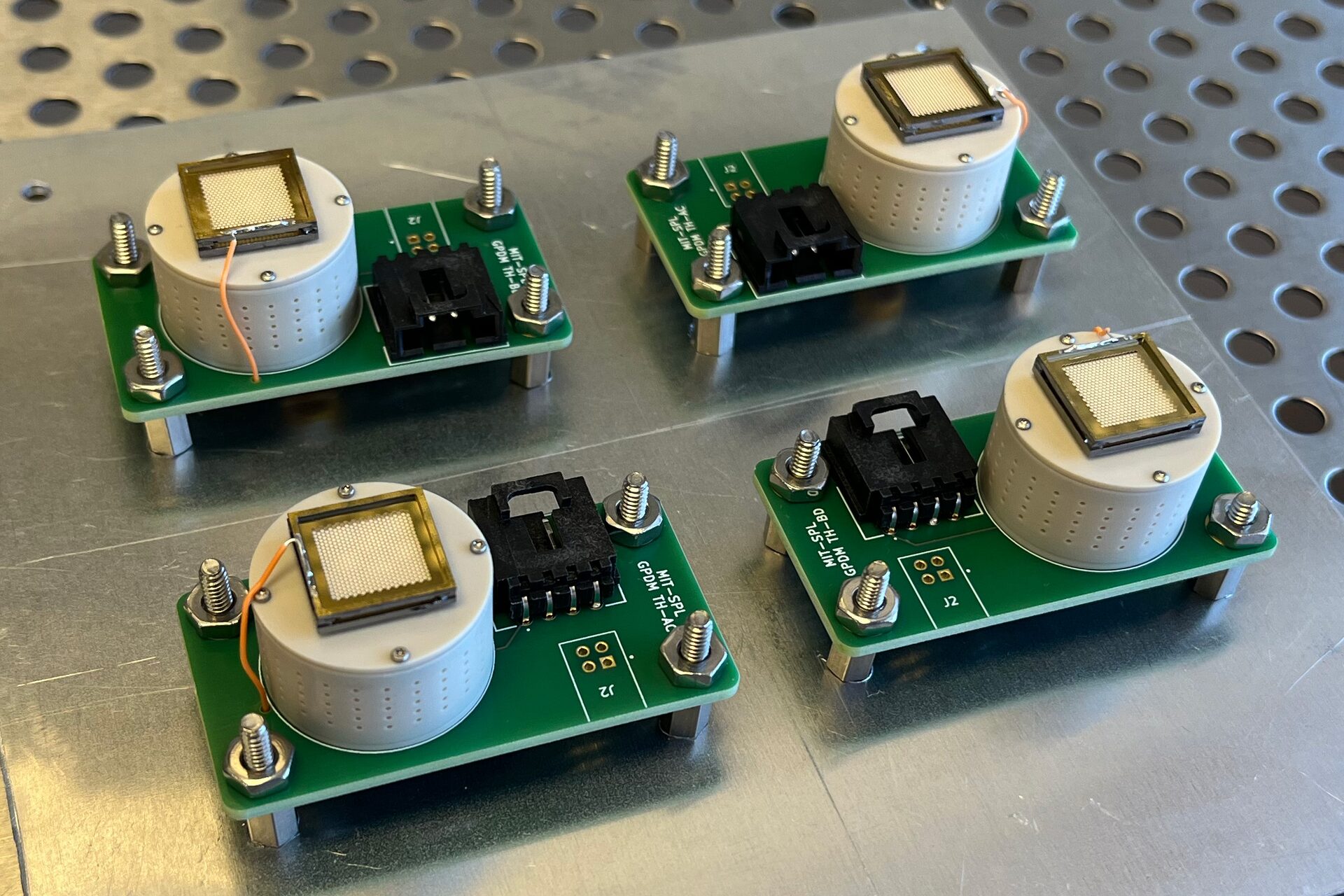
The system could enable the design of nimbler, more flexible small satellites, which could perform both fast, powerful maneuvers and slower, precise adjustments, depending on the mission and moment at hand. 'If you can have chemical and electrical propulsion in one small package, it's the best of both worlds,' says Amelia Bruno, a former postdoc in MIT's Department of Aeronautics and Astronautics (AeroAstro). 'This opens the door for small satellites to do even more science, more observations, and more interesting missions, all on a smaller and cheaper platform.' Bruno is the lead author of a study appearing this week in the Journal of Propulsion and Power showing that a type of 'green monopropellant' originally developed by the U.S. Air Force for use in chemical propulsion in space can also effectively power tiny 'electrospray' thrusters. Electrospray thrusters are dime-sized rockets that use electric fields to charge up a liquid propellant's particles, which are then shot into...
learn more