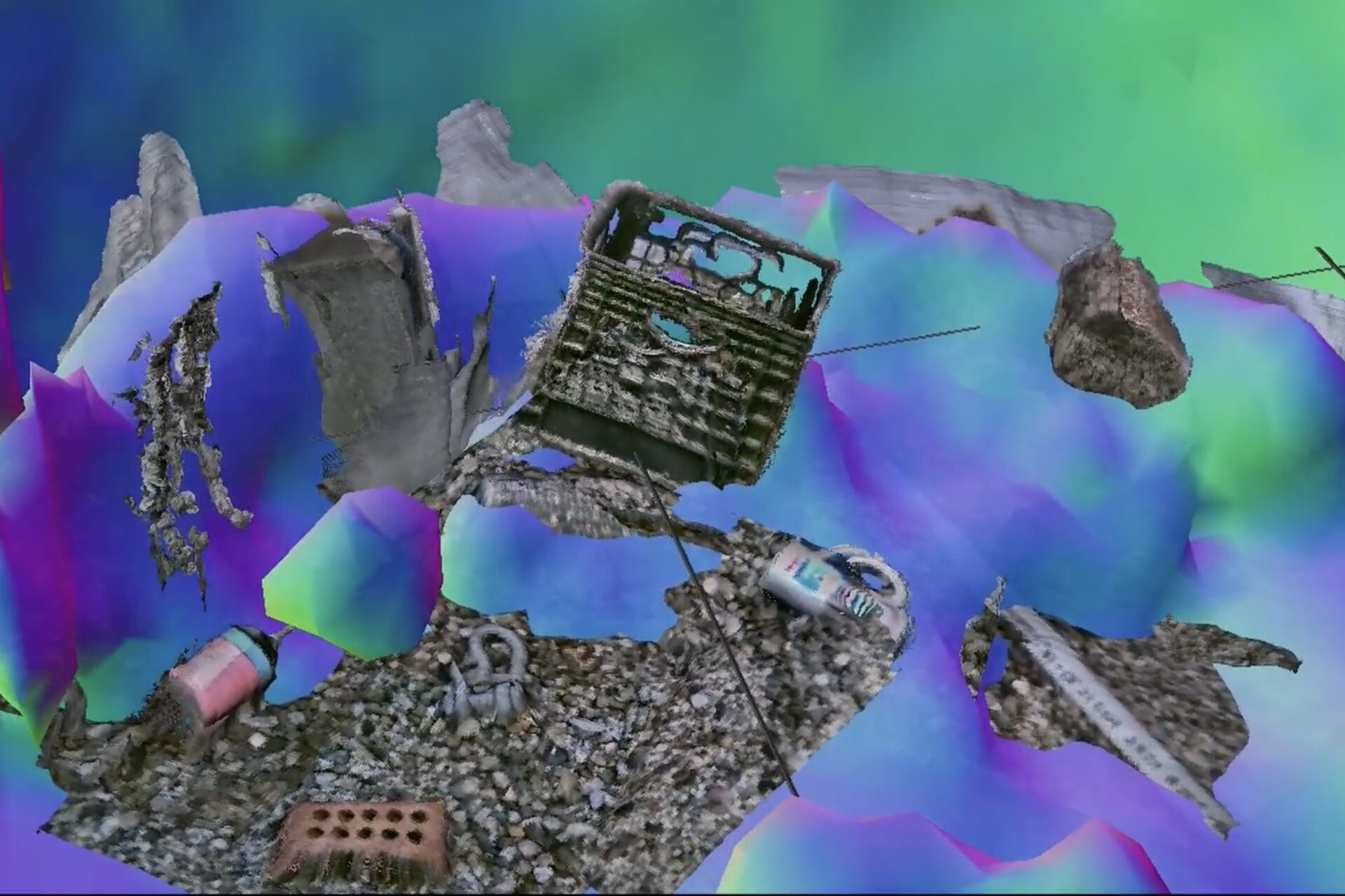
For remotely operated underwater vehicles, cloudy and turbulent waters are often a no-go. When vehicles settle on the seafloor or dig through a sandbed, they can kick up clouds of sediment that make it tough for onboard cameras to see through. Often, the only thing to do is to wait until the marine dust settles before a vehicle can safely proceed. The method fuses visual images from optical cameras with acoustic data from sonar sensors. The combination enables a vehicle to quickly map the general shape of its surroundings using sonar, even in low-visibility waters. A vehicle can move toward certain shapes in the sonar-mapped environment, coming close enough for optical cameras to visually resolve specific objects in detail. The researchers tested the method in tank experiments where they could control the water's degree of visibility. Even in the cloudiest conditions, the system was able to see through the sediment to map the tank's environment and visualize centimeter-scale details...
learn more