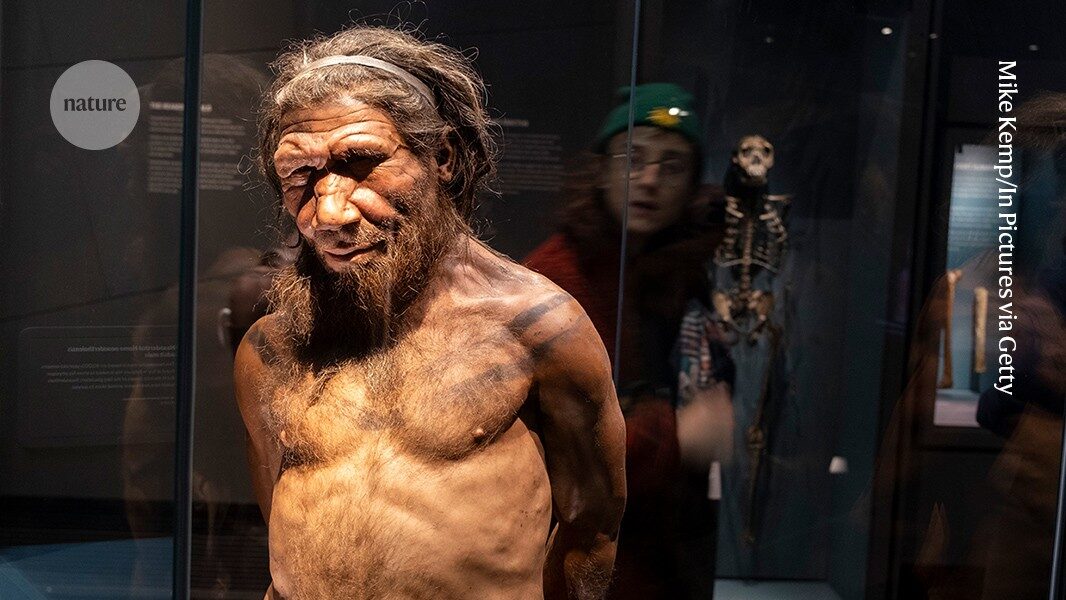
Two genetic changes in the genomes of Neanderthals contributed to the extinct hominin's characteristic robust physique ' and the differences persist in modern humans. The variants make carriers taller and more muscular than non-carriers, according to a study1 published in Current Biology. Neanderthals, who lived across Europe and western Asia from about 300,000 years ago to around 40,000 years ago, interbred with Homo sapiens before going extinct. Previous studies have shown that modern humans with ancestors from outside Africa inherited roughly 1'4% of their DNA from Neanderthals2. Fossil evidence shows that Neanderthals had broader chests3, thicker bones4 and larger muscles than most modern humans do. The latest study provides a plausible molecular pathway that contributed to the Neanderthals' robust traits, says Bastien Llamas, a human geneticist at Adelaide University in Australia. Well-preserved Neanderthal remains are extremely rare and, so far, scientists have recovered only...
learn more