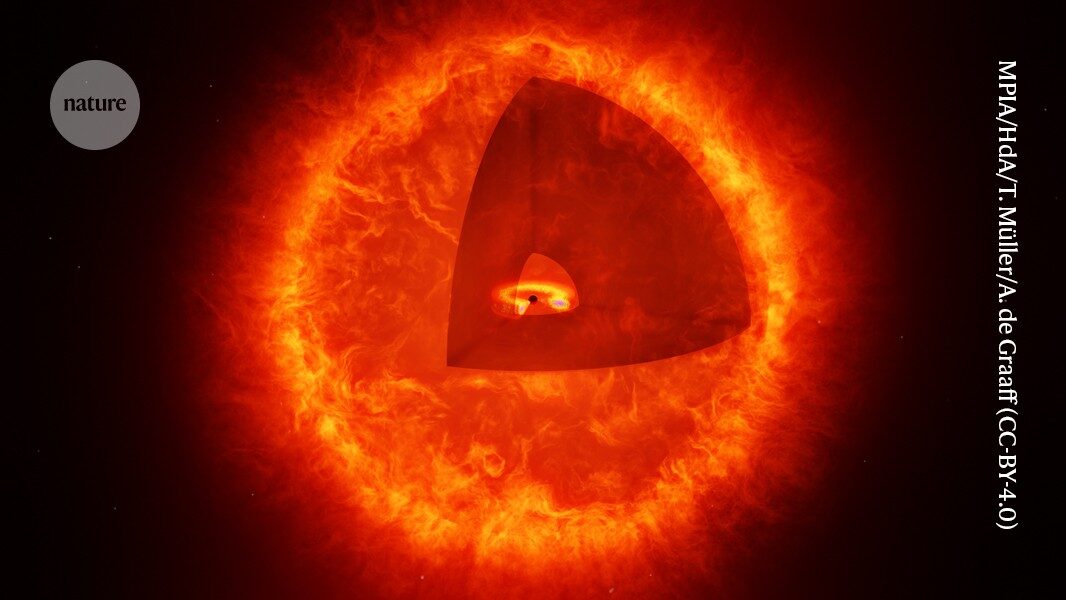
When the James Webb Space Telescope (JWST) looked back in time to observe the Universe's earliest moments, it presented astronomers with something most peculiar: hundreds of 'little red dots' that inexplicably freckled the ancient cosmos. The specks, named for their compact size in JWST images and their emission of long, 'red' wavelengths of light, initially baffled astronomers. They seemed too condensed to be galaxies, yet didn't emit the right kind of light to be black holes. Researchers quickly dubbed the dots, which JWST first detected in 2022, Universe breakers, because they contradicted standard thinking about the features of the early Universe. Over the past few months, researchers have begun to settle on the identity of these dots, and it's one that seldom emerges in astronomy: a brand-new type of celestial object. 'It's extremely rare that you get to work on a truly new physical phenomenon like this,' says Anna de Graaff, an astronomer at the Max Planck Institute for...
learn more