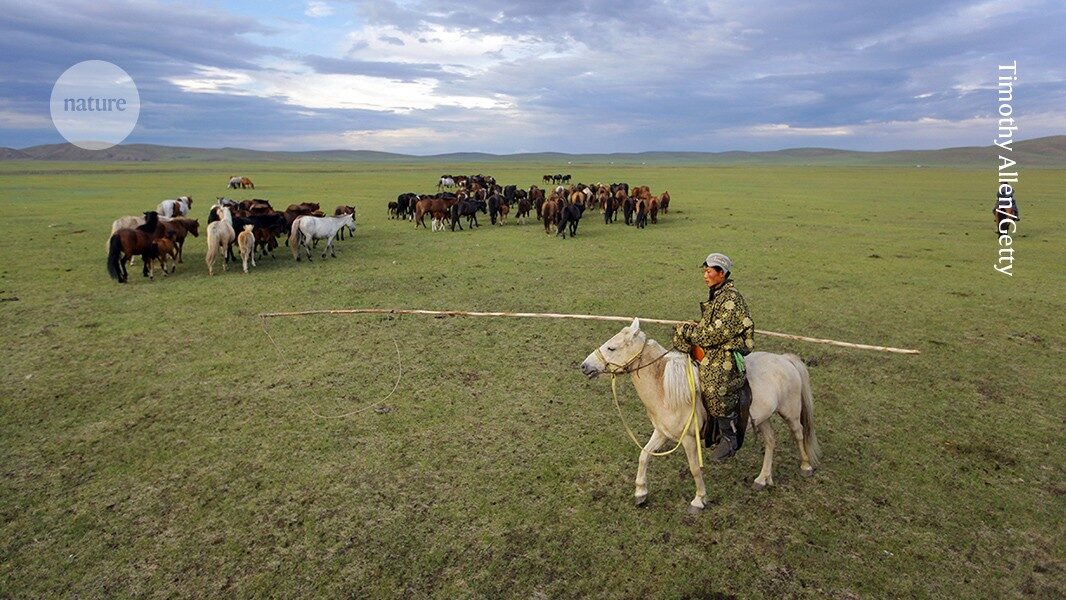
Rising temperatures, desertification and overgrazing are taking a heavy toll on Mongolia's iconic desert grasslands, as well as its nomadic herding culture. But a team of researchers might have hit on an underground solution. They've found clues that protecting key fungal networks that support life above the surface could help to preserve biodiversity, boost climate resilience and revive degraded lands. In most ecosystems, invisible networks of fungi trade resources with plants by interlocking with their roots. These arbuscular mycorrhizal fungi provide the plants with nitrogen and phosphorus gathered from the soil; in return, the plants send excess carbon through their roots to the fungi, helping to sequester it from the atmosphere. 'Mongolia has very unique fungal networks that power these arid grasslands,' says evolutionary biologist Toby Kiers at the Free University of Amsterdam. Kiers is leading a project to map and identify mycorrhizal-fungus hotspots in Mongolia. 'As we fight...
learn more