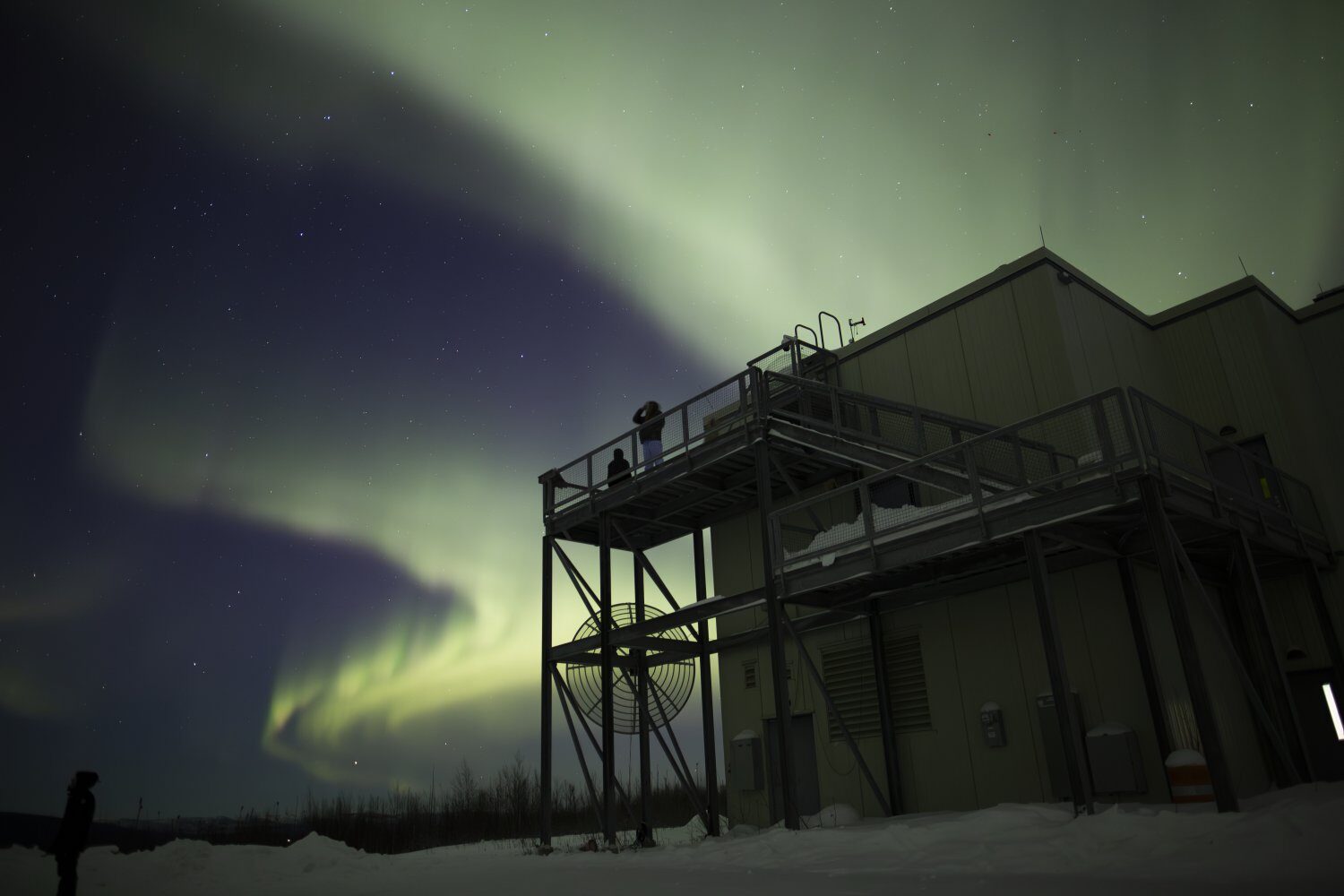
For many graduate students, waking up at noon after a 4 a.m. bedtime is a sign of a night well spent. For a group of MIT students, it was simply the start of their workday ' timed not to the sun, but to the aurora. Their goal was simple: to study plasma phenomena using the aurora borealis as a natural laboratory. The process, less so; working largely in darkness in Fairbanks, Alaska, the students conducted experiments in temperatures that dipped as low as -25 degrees Fahrenheit, using red headlamps for visibility. The sun set before 3 p.m., and even at its warmest, temperatures barely reached 20 F. The aurora provides a rare opportunity to observe plasma behavior directly, as charged particles that interact with Earth's magnetic field produce visible, large-scale structures in the night sky. As Fairbanks is situated beneath a region of especially frequent auroral activity, it is one of the most reliable places in the world to observe these phenomena, though the conditions come with...
learn more