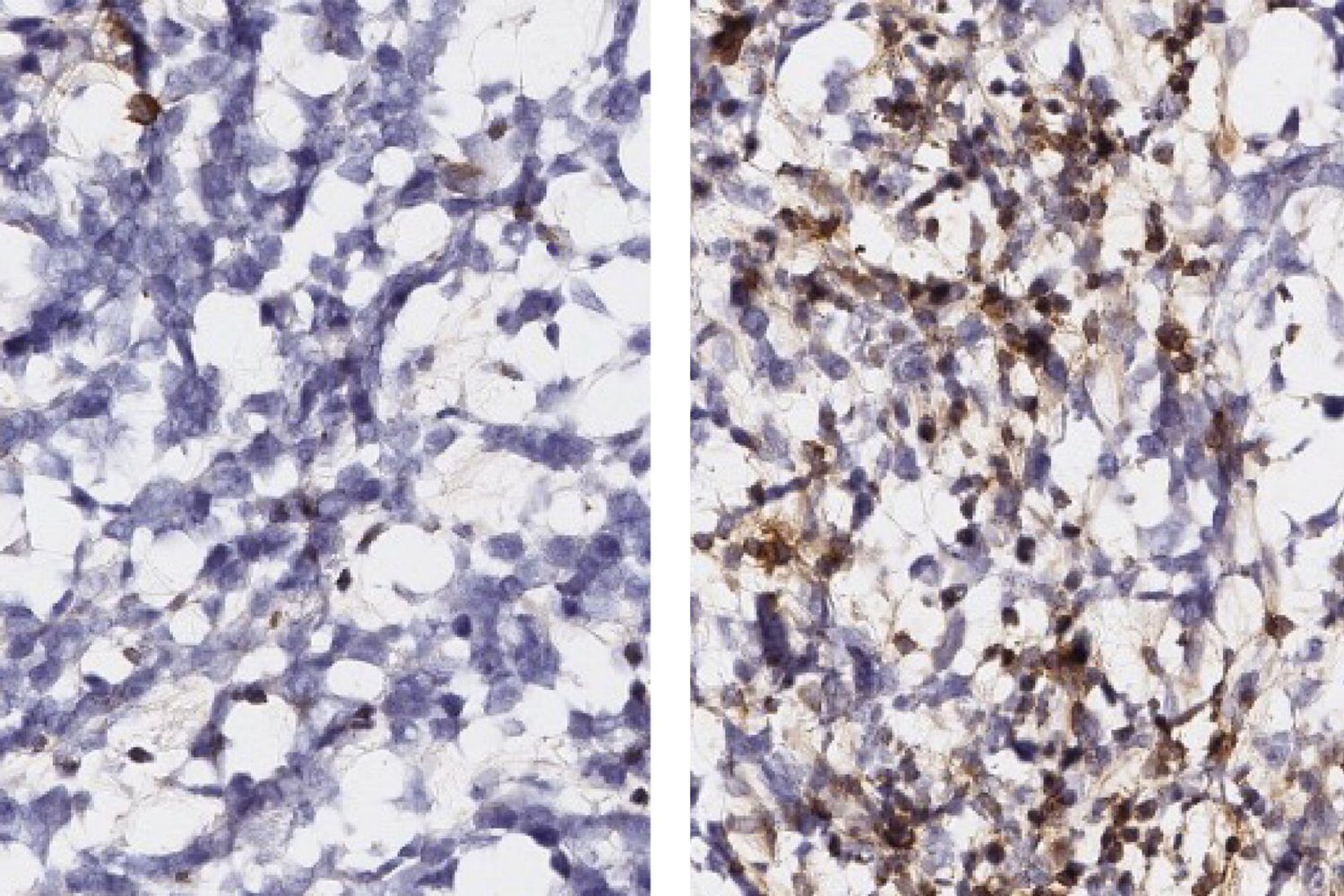
Glioblastoma is the most common form of brain cancer in adults, and its consequences are usually quick and fatal. After receiving standard-of-care treatment (surgery followed by radiation and chemotherapy), fewer than half of patients will survive longer than 15 months. Only 5 percent of patients survive longer than five years. Researchers have explored immune checkpoint inhibitors as an avenue for boosting glioblastoma survival rates. This type of immunotherapy, which has proven effective against a range of tumor types, turns off a molecular switch that prevents T cells from attacking cancer cells. The patient's own immune system is then able to clear the tumor. However, glioblastoma is unusually resistant to attack by T cells, rendering immune checkpoint inhibitors ineffective. The culprit is a different immune cell, macrophages, which have been recruited to tumors, where they support tumor growth while suppressing the ability of T cells to infiltrate and attack tumors. A team of...
learn more