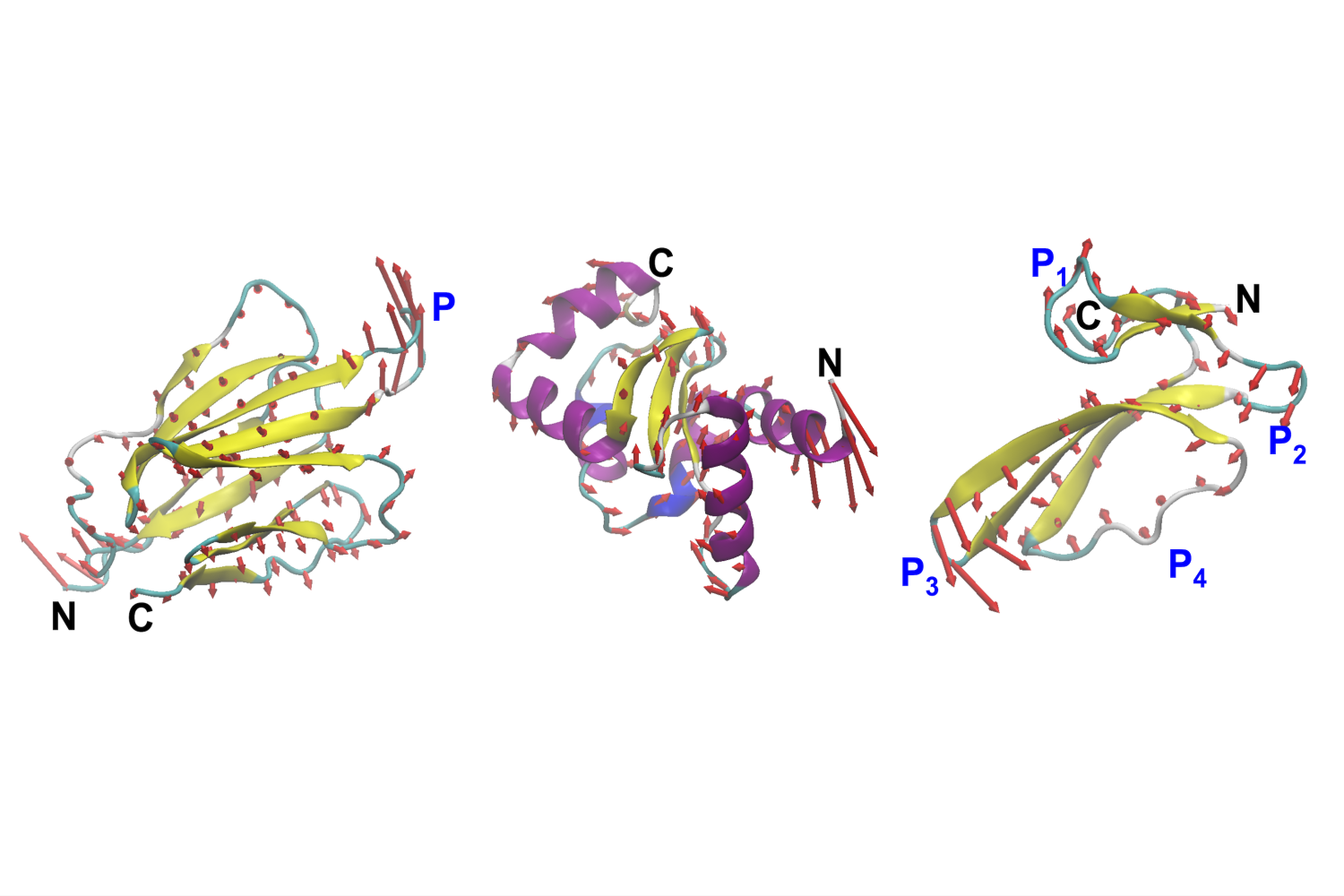
Proteins are far more than nutrients we track on a food label. Present in every cell of our bodies, they work like nature's molecular machines. They walk, stretch, bend, and flex to do their jobs, pumping blood, fighting disease, building tissue, and many other jobs too small for the eye to see. Their power doesn't come from shape alone, but from how they move. In recent years, artificial intelligence has allowed scientists to design entirely new protein structures not found in nature tailored for specific functions, such as binding to viruses, or mimicking the mechanical properties of silk for sustainable materials. But designing for structure alone is like building a car body without any control over how the engine performs. The subtle vibrations, shifts, and mechanical dynamics of a protein are just as critical to its functions as its form. Now, MIT engineers have taken a major step toward closing the gap with the development of an AI model known as VibeGen. If vibe coding lets...
learn more