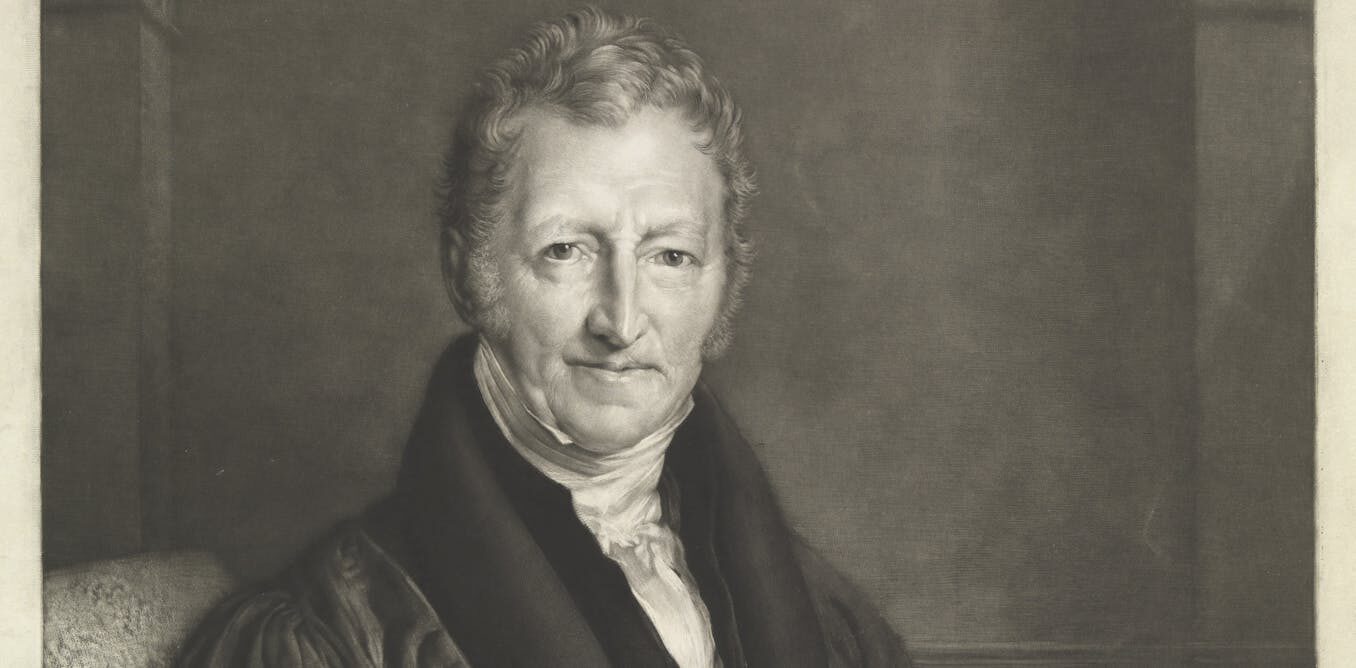
No one uses 'Malthusian' as a compliment. Since 1798, when the economist and cleric Thomas Malthus first published 'An Essay on the Principles of Population,' the 'Malthusian' position ' the idea that humans are subject to natural limits ' has been vilified and scorned. Today, the term is lobbed at anyone who dares question the optimism of infinite progress. The story goes like this: Once upon a time, an English country parson came up with the idea that population increases at a 'geometrical' rate, while food production increases at an 'arithmetical' rate. That is, population doubles every 25 years, while crop yields increase much more slowly. Over time, such divergence must lead to catastrophe. But Malthus identified two factors that reduced reproduction and held off disaster: moral codes, or what he called 'preventative checks,' and 'positive checks,' such as extreme poverty, pollution, war, disease and misogyny. In the all-too-common caricature, Malthus was a narrow-minded...
learn more