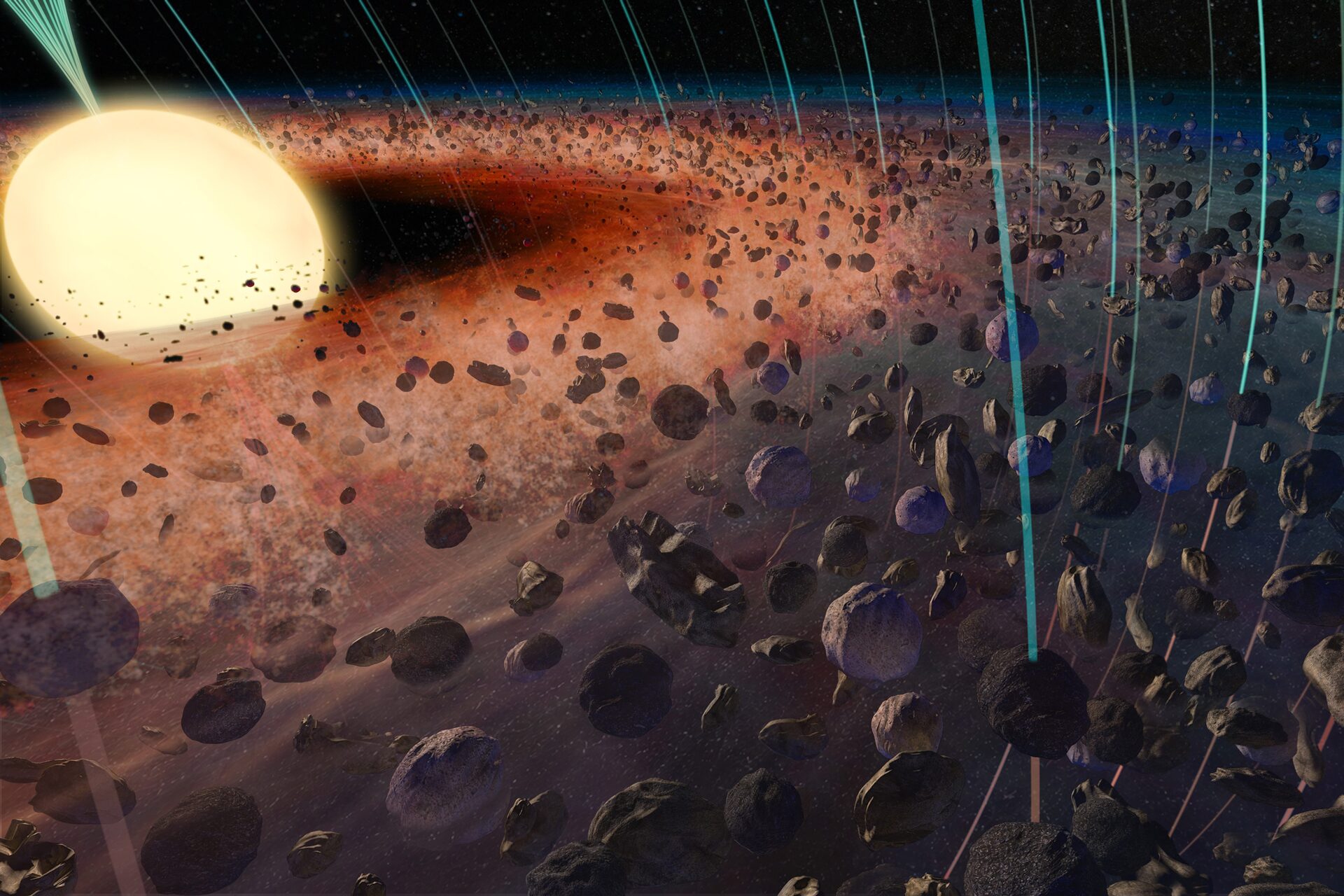
Around 4.6 billion years ago, the solar system was little more than a giant ball of gas and dust. Over the next few million years, this 'solar nebula' underwent a huge transformation, flattening into a disk of matter that then condensed to form the central sun and orbiting planets. MIT scientists have discovered records of ancient magnetism in the oldest samples of meteorites known today. The team analyzed microscopic grains embedded in a meteorite that was discovered in Antarctica in 2008. These grains, called calcium-aluminum-rich inclusions, or CAIs, originally formed during the solar system's first 200,000 years, making the samples the oldest known solar system material. The findings suggest that a magnetic field existed very early on, during the time of the solar nebula. The researchers estimate that this nebular magnetic field was stronger than Earth's magnetic field today, and likely played a significant role in pulling together primordial matter to form the early sun. 'This...
learn more