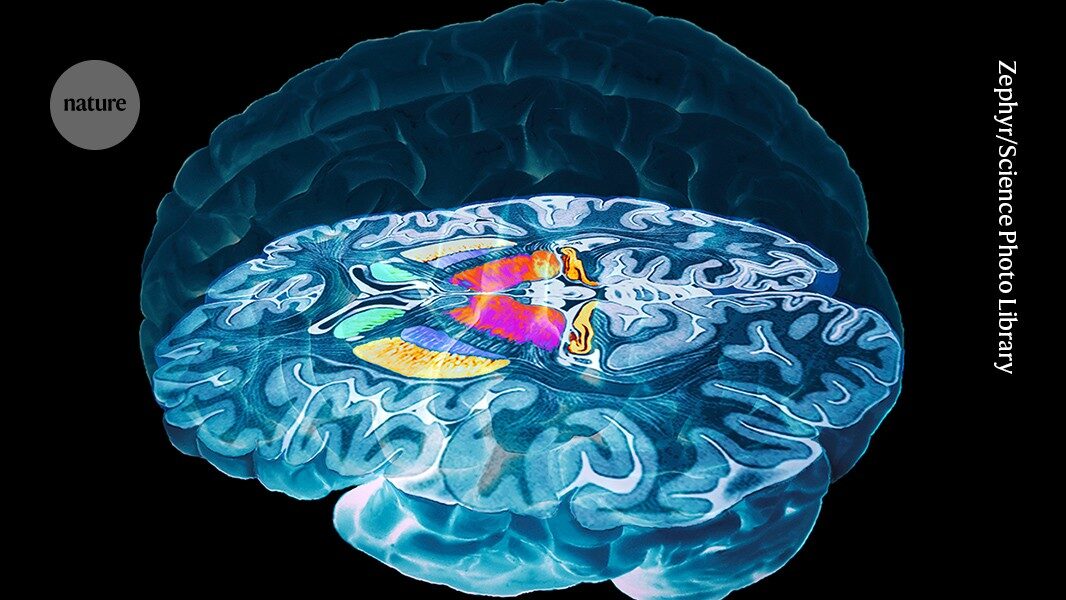
The basal ganglia are groups of cells that sit deep in the brain and process motor, cognitive, mood and decision-making information. They are linked to neurodegenerative and psychiatric conditions from Parkinson's and Huntington's disease to schizophrenia, bipolar disorder and addiction. Now, researchers have published the world's most-detailed atlas of basal ganglia so far, comprising 25.5 million brain cells from humans, macaques and marmosets. The work is described in a collection of 26 papers published in Cell, Cell Reports, Cell Reports Methods, Cell Systems, Cell Genomics and Neuron. The research includes understudied neurons1, provides insights about how some brain cells change with age2 and suggests which might be linked to diseases3. The atlas, a collaboration between hundreds of scientists in nine countries, is part of the BRAIN Initiative Cell Atlas Network (BICAN) ' a US$500-million project launched in 2022 by the US National Institutes of Health aimed at creating...
learn more