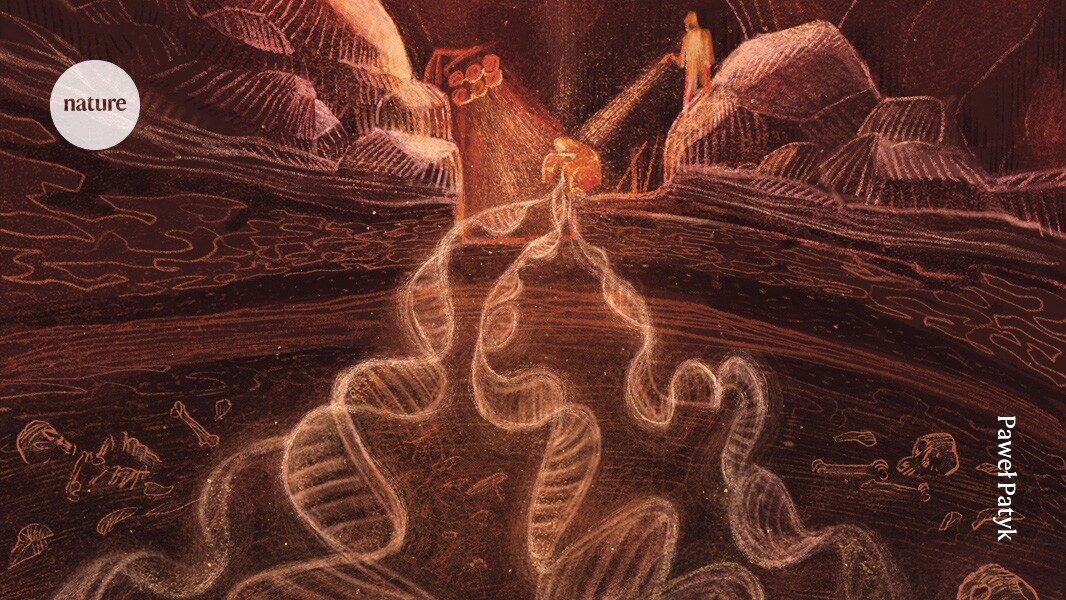
When he was a doctoral student at the University of Copenhagen, Eske Willerslev was a nobody. At least, that's how it seemed to the budding evolutionary geneticist, who was unable to lay his hands on one of the few coveted fossils that might still contain traces of ancient DNA. But frustration turned to inspiration one autumn day in 2000, when he saw a dog depositing its morning poo onto the ground. The droppings contain DNA, he thought, and perhaps, even after rain washes them away, some DNA might remain. And if it does stick around, the genetic material of long-dead animals might also persist in the environment. That would mean he could learn something about those creatures, even without getting access to priceless museum specimens. Willerslev's idea was ridiculed by his professors at the time. 'I've never heard anything as stupid as this,' he recalls one of them remarking. But his hunch bore incredible fruit. In a 2003 paper in Science, he showed that plant and animal DNA could...
learn more