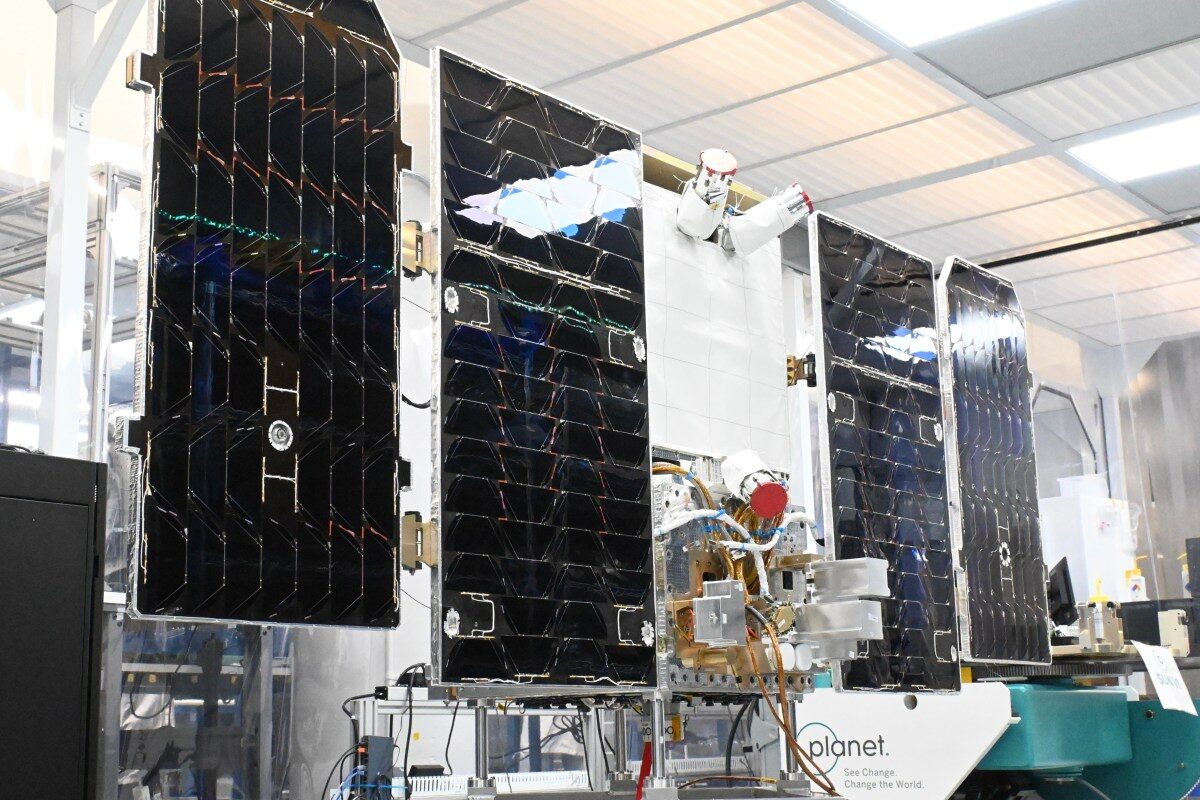
Built by Planet Labs, the satellite will prove that a Google Tensor Processing Unit, its competitor to Nvidia's GPUs, can function in space. That means supplying a kilowatt of continuous power, cooling the chip, and running a series of models through their paces to see if anything goes wrong. 'We've done testing on the ground, but you know, there's no test that's completely as good as the real thing,' said Travis Beals, the Google executive managing Project Suncatcher, the tech giant's plan to develop large-scale compute clusters in orbit around the Earth. Once commissioned, the satellite will fire up its TPU in 15-minute bursts to avoid straining the satellite's power and thermal management systems. This satellite is based on a standard platform built by Planet Labs, but the two companies are working on a demo expected to take flight next year that will see two satellites more purpose-built for advanced compute that can run more substantial workloads. Those future versions will...
learn more