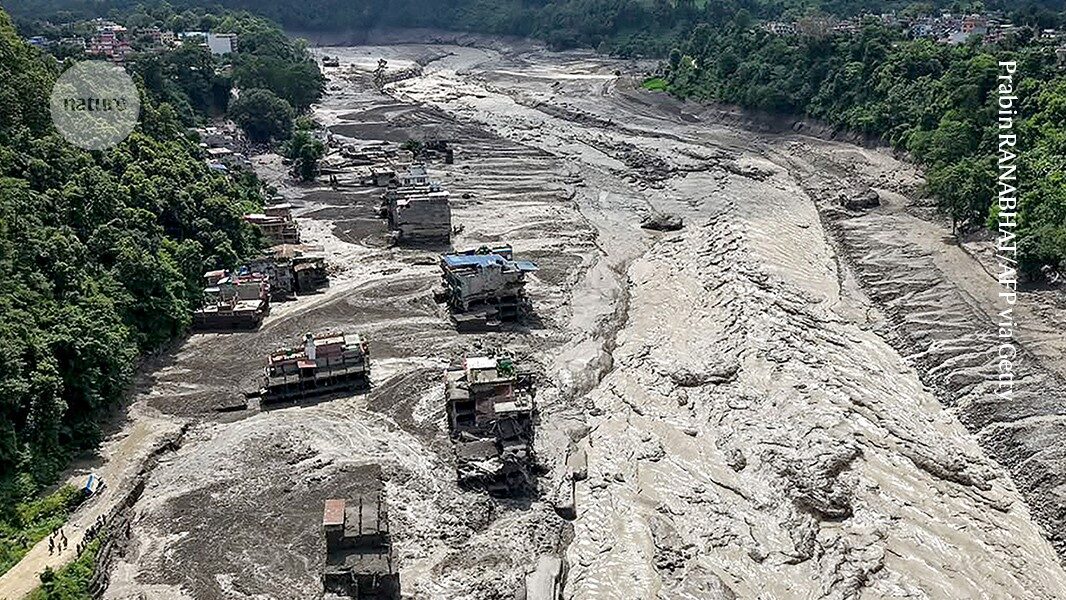
Around 350 people have died and more than 1,000 are missing, after a deadly deluge of rocks, mud and water hit villages along the border of Nepal and Tibet on Wednesday. The US Geological Survey says the event was caused by a glacial collapse that led to a massive landslide and flash flooding. The ice and rock collapse was strong enough to cause a 5.2-magnitude seismic event and send a massive wall of water downstream into the Bhotekoshi River system, along which tens of thousands of people live. Scientists say it will take time to establish the extent to which global warming had a role in this glacial collapse. But melting glaciers and permafrost ' frozen soil and rocks ' in the Himalayas probably contributed to the event, says Goran Ekstrom, a geophysicist at Columbia University in New York City. Global warming is affecting the high-altitude regions across the world, says Alton Byers, a mountain geographer at the University of Colorado, Boulder. 'These catastrophic floods are...
learn more