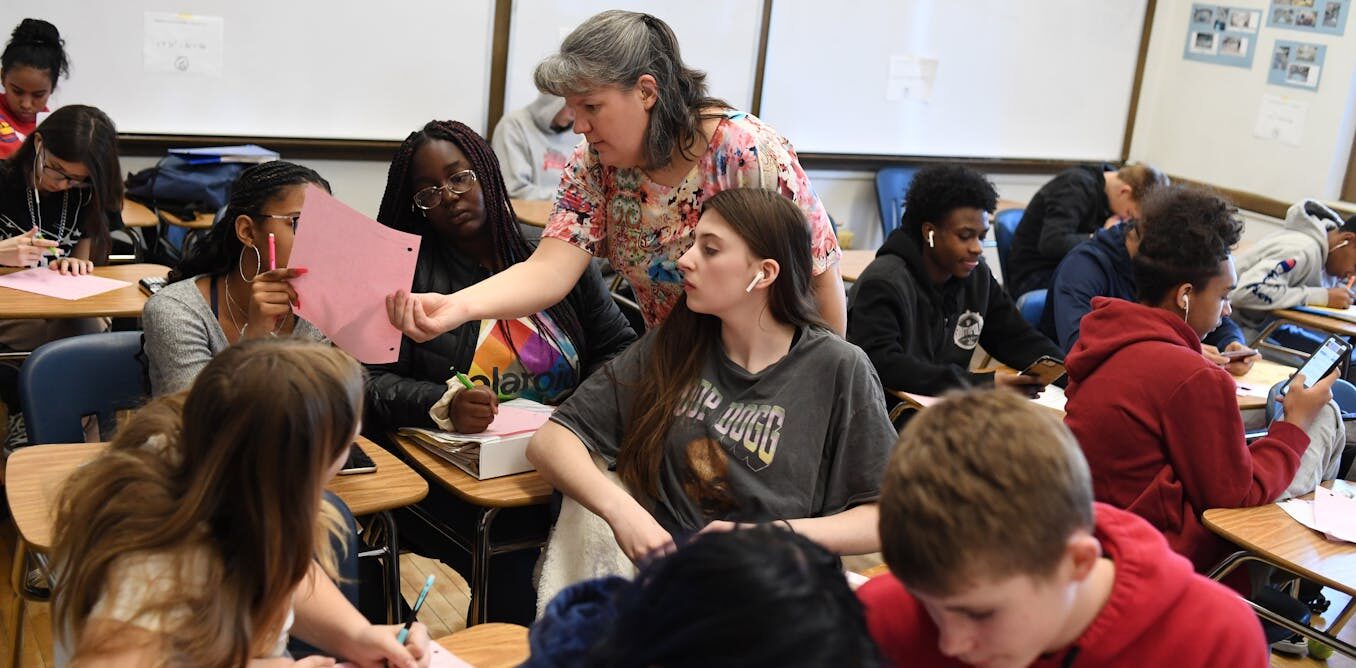
Among high school students and adults, girls and women are much more likely to use traditional, step-by-step algorithms to solve basic math problems ' such as lining up numbers to add, starting with the ones place, and 'carrying over' a number when needed. Boys and men are more likely to use alternative shortcuts, such as rounding both numbers, adding the rounded figures, and then adjusting to remove the rounding. But those who use traditional methods on basic problems are less likely to solve more complex math problems correctly. These are the main findings of two studies our research team published in November 2025. This new evidence may help explain an apparent contradiction in the existing research ' girls do better at math in school, but boys do better on high-stakes math tests and are more likely to pursue math-intensive careers. Our research focuses not just on getting correct answers, but on the methods students use to arrive at them. We find that boys and girls approach...
learn more