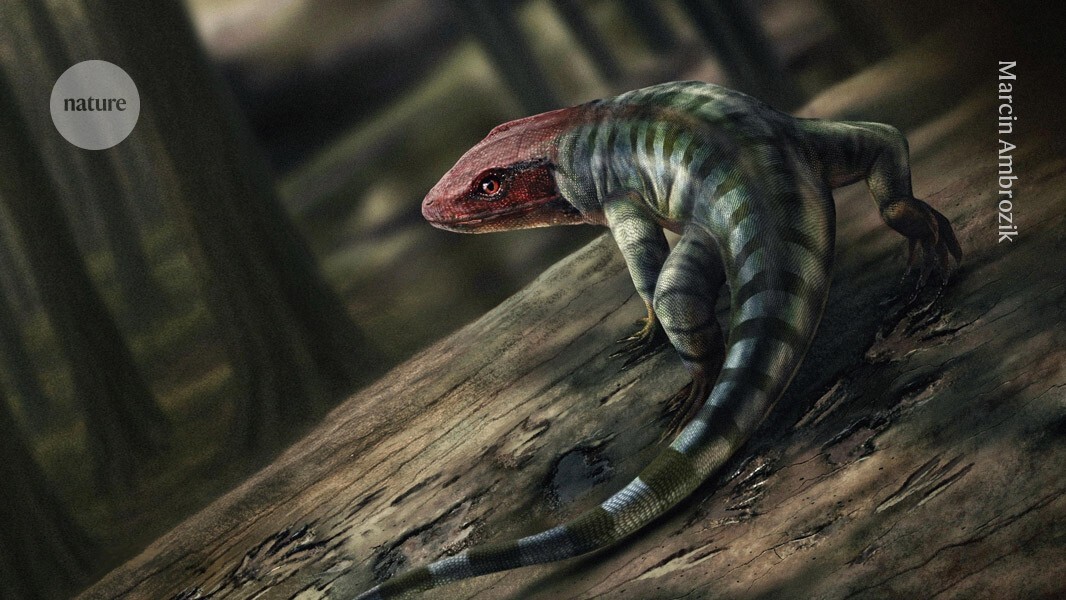
Fossil claw prints found in Australia were probably made by the earliest known members of the group that includes reptiles, birds and mammals, according to a study published in Nature today1. The findings suggest that this group ' the amniotes ' originated at least 35 million years earlier than previously thought. Early amniotes evolved to lay eggs on land, because they were encased in an amniotic membrane that stopped them drying out. Before this study, the earliest known amniote fossils had been found in Nova Scotia, Canada, and were dated to the mid-Carboniferous period, about 319 million years ago. The latest findings suggest that amniotes also existed in the early Carboniferous period, around 355 million years ago. The discovery also means the last common ancestor between modern amphibians and amniotes such as reptiles and mammals must have existed even further back in time, says co-author, a palaeontologist at Flinders University in Adelaide, Australia. Dating by the team...
learn more