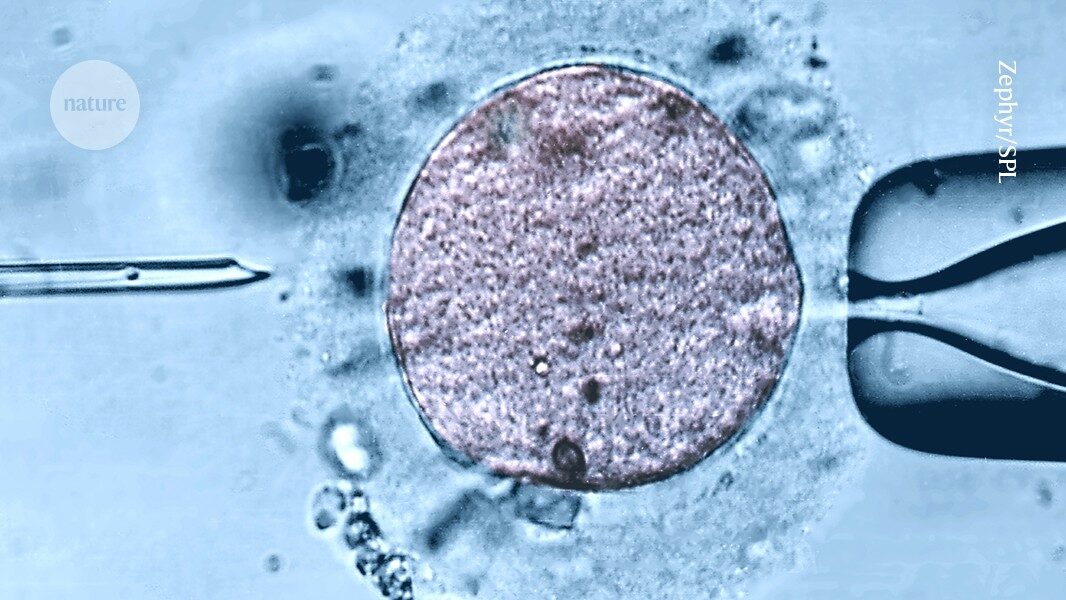
A needle approaches an egg cell (purple) during in vitro fertilization, which some clinics are offering in combination with a procedure called mitochondrial replacement therapy. Credit: Zephyr/Science Photo Library A small number of fertility clinics around the world are offering a controversial treatment: a procedure to furnish clients' embryos with donated mitochondria as a way to increase the chances of taking home a baby. The method, called mitochondrial replacement therapy (MRT), involves removing the nucleus from a person's egg or a couple's single-cell embryo and transplanting it into an egg from a young donor. The theory ' which remains unproven in rigorous clinical trials ' is that the donor's mitochondria might help the egg, after it is fertilized, or embryo to mature. Any resulting babies would have nuclear DNA from their biological mothers and fathers and mitochondrial DNA from the egg donor. Scientists have already shown in a clinical trial that MRT can produce healthy...
learn more