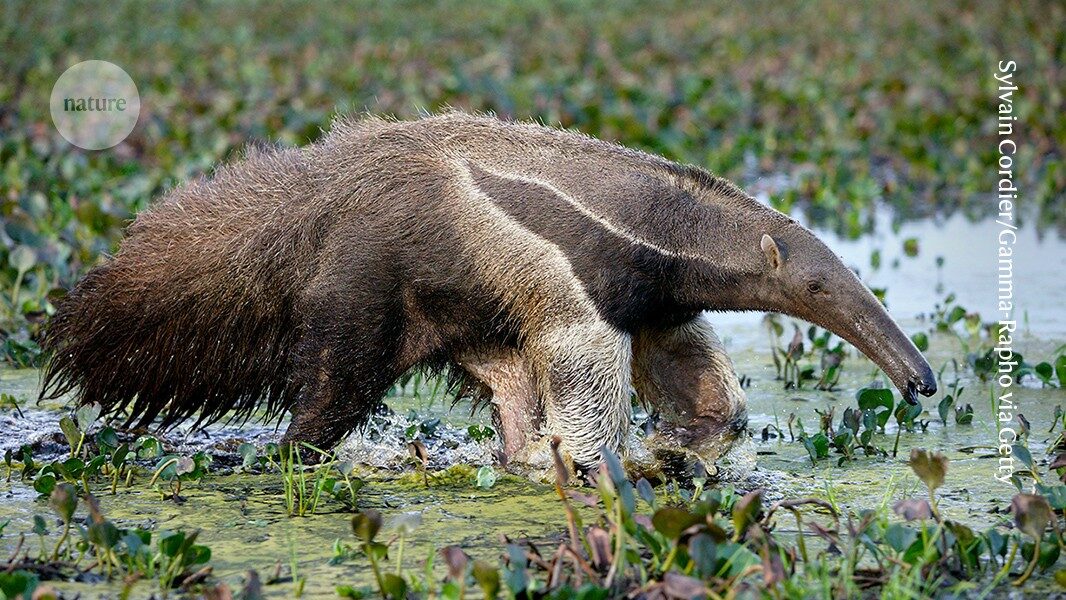
Researchers measured the concentration of microplastics in the blood of 47 animals: 26 lowland tapirs (Tapirus terrestris) and 21 giant anteaters (Myrmecophaga tridactyla). The scientists found that, on average, the creatures carry similar levels of plastic to many humans ' roughly 74 particles per millilitre of blood. The animals that lived closest to human infrastructure and waste-management facilities had the highest levels of microplastics in their blood. But even those living more than 100 kilometres from a waste sites and 65 kilometres from human infrastructure showed traces of the pollutants. This indicates that plastics can reach wildlife living far from where the pollution originates, says study co-author Marcia de Almeida Monteiro Melo Ferraz, a conservation scientist at the University of British Columbia, Okanagan in Kelowna, Canada. Microplastics are tiny particles (smaller than five millimetres) with many different chemical compositions. They can travel through the...
learn more